Thursday, June 30, 2016

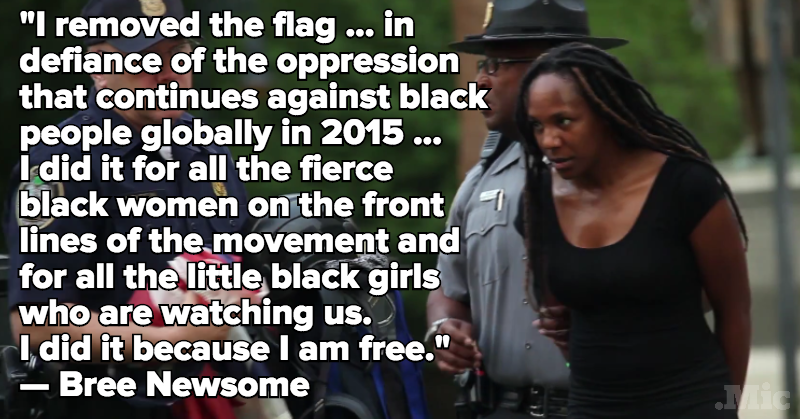
"I come against you in the name of God. This flag comes down today!"

On June 27 of last year, as the shock of the 9 murdered in Emanuel AME Church in Charleston, SC still rocked our nation and debates raged about what to do with the Confederate Flag that still waived in many places throughout the south, Bree Newsome, a 30 year old Christian activist & artist climbed the flag pole at the State Capitol of South Carolina and unhooked the Confederate flag.

"You come against me with hatred and oppression and violence. I come against you in the name of God. This flag comes down today!"

She recited Psalm 27 and the Lord’s Prayer as she brought the flag down and was arrested when she hit the ground.

Psalm 27

1 The LORD is my light and my salvation; whom then shall I fear? *
the LORD is the strength of my life; of whom then shall I be afraid?

2 When evildoers came upon me to eat up my flesh, *
it was they, my foes and my adversaries, who stumbled and fell.

3 Though an army should encamp against me, *
yet my heart shall not be afraid;

4 And though war should rise up against me, *
yet will I put my trust in him.

5 One thing have I asked of the LORD; one thing I seek; *
that I may dwell in the house of the LORD all the days of my life;

6 To behold the fair beauty of the LORD *
and to seek him in his temple.

7 For in the day of trouble he shall keep me safe in his shelter; *
he shall hide me in the secrecy of his dwelling and set me high upon a rock.

8 Even now he lifts up my head *
above my enemies round about me.

9 Therefore I will offer in his dwelling an oblation with sounds of great gladness; *
I will sing and make music to the LORD.

10 Hearken to my voice, O LORD, when I call; *
have mercy on me and answer me.

11 You speak in my heart and say, "Seek my face." *
Your face, LORD, will I seek.

12 Hide not your face from me, *
nor turn away your servant in displeasure.

13 You have been my helper; cast me not away; *
do not forsake me, O God of my salvation.

14 Though my father and my mother forsake me, *
the LORD will sustain me.

15 Show me your way, O LORD; *
lead me on a level path, because of my enemies.

16 Deliver me not into the hand of my adversaries, *
for false witnesses have risen up against me, and also those who speak malice.

17 What if I had not believed that I should see the goodness of the LORD *
in the land of the living!

18 O tarry and await the LORD'S pleasure; be strong, and he shall comfort your heart; *
wait patiently for the LORD.


That is putting your faith into action.



A helpful reflection:

http://www.slate.com/articles/news_and_politics/politics/2015/06/after_obama_s_eulogy_to_clementa_pinckney_and_bree_newsome_taking_down_the.html

And now a year later, Bree Newsome reflects:

https://sojo.net/articles/bree-newsome-sustaining-daily-grind-activism

There is a lot of work to do. May we role up our sleeves and get to work (and climb some poles!).


Almighty God, who hast created us in thine own image: Grant us grace fearlessly to contend against evil and to make no peace with oppression; and, that we may reverently use our freedom, help us to employ it in the maintenance of justice in our communities and among the nations, to the glory of thy holy Name; through Jesus Christ our Lord, who liveth and reigneth with thee and the Holy Spirit, one God, now and for ever. Amen. 

Remembering St. Peter & St. Paul (Feast Day: June 29)

Some interesting thoughts about St. Peter (and Paul) our Patron Saint.

https://andrewmarrosb.wordpress.com/2016/06/28/gods-reconciliation-a-thought-on-the-feast-of-saints-peter-paul/

Scripture does not tell us how this conflict ended as far as these two men are concerned although subsequent tradition claims that they were indeed reconciled. Likewise, the Johannine literature stemming from the Beloved Disciple was integrated into the New Testament, creating a deeper unity then Peter and the Beloved Disciple seem to have had. The art of differing and reconciling with others is much too complex to be taught in a brief sermon, but we have a couple of basics to get us started. 1) Keep our attention focused on those who depend on us for pastoral support; 2) Remember that Divine Providence can and will work out a deeper harmony underlying our conflicts and it isn’t always up to solve them, which means that, as Peter was told to stop worrying about his rival, we should stop worrying about our own rivals quite so much. And now for a third thought: Both Peter and Paul had much to repent of and they did just that. Can we do the same?
http://www.growchristians.org/2016/06/29/celebrating-st-peter-st-paul-apostles/

Peter and Paul were surely flawed. In fact one of the striking things about our tradition is that it captures and preserves their errors. Among the greatest stories of our faith is that of Peter’s denial of Jesus – not once, but three times. We also remember that Saul breathed “threats and murder against the disciples of the Lord.” They were granted the grace to begin again, and so are we.

http://www.growchristians.org/2016/06/23/preparing-to-celebrate-st-peter-st-paul/

And when we break bread together, we can enjoy this appetizer made with first-century Roman ingredients:

Fig and Goat Cheese Crostini

Ingredients: 1 loaf crusty Italian Bread
¼ cup extra virgin olive oil
½ cup goat cheese
1/4 cup fig jam
1 pint fresh figs, sliced

Optional Swaps: Any kind of bread slices
Perhaps cream cheese for the young palate
Grape jelly
A large apple, sliced (Fresh figs are seasonal and may be unavailable. Apples are a great swap because early Romans loved apples and propagated them throughout their empire.)

Instructions: 1. Slice bread, brush with olive oil, and toast.
2. Spread toasted slices with cheese.
3. Carefully spread jam on top of the cheese.
4. Set a sliced piece of fruit on top of each and serve as a snack or appetizer.

Tuesday, June 28, 2016

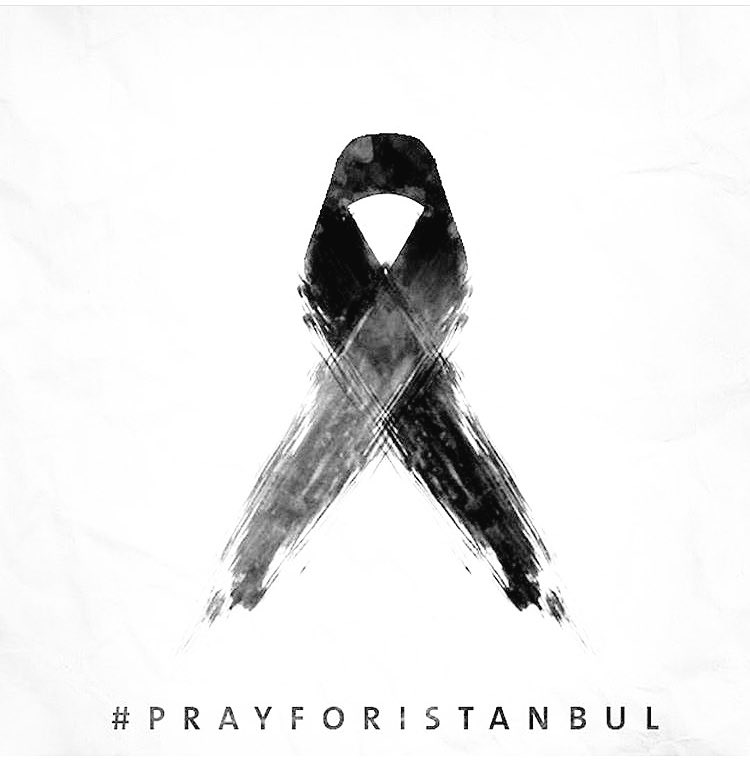
#PrayforTurkey


Once again our world is rocked by violence from terrorists.  This time at an airport in Istanbul, Turkey.  We pray for the victims.  We pray for the first responders.  We pray for the enemy and all who seek us harm.

Prayers from the Book of Common Prayer:

O God, you made us in your own image and redeemed us through Jesus your Son; Look with compassion on the whole human family; take away the arrogance and hatred which infect our hearts; break down the walls that separate us; unite us in bonds of love; and work through our struggle and confusion to accomplish your purposes on earth; that, in your good time, all nations and races may serve you in harmony around your heavenly throne; through Jesus Christ our Lord. Amen.

O God, the Father of all, whose Son commanded us to love our enemies: Lead them and us from prejudice to truth: deliver them and us from hatred, cruelty, and revenge; and in your good time enable us all to stand reconciled before you, through Jesus Christ our Lord. Amen.

Lord, make us instruments of your peace. Where there is hatred, let us sow love; where there is injury, pardon; where there is discord, union; where there is doubt, faith; where there is despair, hope; where there is darkness, light; where there is sadness, joy. Grant that we may not so much seek to
be consoled as to console; to be understood as to understand; to be loved as to love. For it is in giving that we receive; it is in pardoning that we are pardoned; and it is in dying that we are born to eternal life. Amen.

O merciful Father, you have taught us in your holy Word that you do not willingly afflict or grieve your children: Look with pity upon the sorrows of your servants for whom our prayers are offered (for the families of the victims in Istanbul). Remember them, O Lord, in mercy, nourish their souls with patience, comfort them with a sense of your goodness, lift up your countenance upon them, and give them peace; through Jesus Christ our Lord. Amen.

May the souls of the departed through the mercy of God, rest in peace. Amen.

Sermon (June 26)

O Holy Creator, we give you thanks for all you are and all you bring to us for our visit within your creation. In Jesus, you place the Gospel in the center of this sacred circle through which all of creation is related. You show us the way to live a generous and compassionate life. Give us your strength to live together with respect and commitment as we grow in your spirit, for you are God, now and forever. Amen.

Jesus said, “No one who puts a hand to the plow and looks back is fit for the kingdom of God.”

Jesus has some pretty clear ideas about how we are to follow him. To follow Jesus is not a series of thou shall not do this or that, but it is walking in Jesus’ footsteps and living out of his love.

Consider today’s Gospel reading from Luke, Jesus is traveling to Jerusalem, along the way they stop at a Samaritan village but were not received because Jesus was heading to Jerusalem. James & John ask if they should call down fire upon their village, but Jesus rebukes them. That is not how they should be as a disciples, calling down the fire of God.

When Jesus encounters others along the road who want to become his followers, he challenges each of them: To the first, he tells them that Jesus has no place to lay his head. This will not be an easy journey but it could well mean that Jesus does not rest in any one place. To another, he challenges them to let others lay the dead to rest, to instead go and proclaim the kingdom of God. To the final one, Jesus tells them they can’t look back, settle their affairs and then follow him, no, discipleship means you follow him, right now in the midst of your chaotic lives.

Similarly we struggle with our lives and how we want to live them in the light of his Gospel, much like the disciples. We see similar struggles in Paul’s letters as he tries to help those new communities understand the faith be it in Galatia or elsewhere. To be a disciple is to follow Jesus not only in good times but down roads full of despair, violence and even death.

He peddles his bicycle through the dangerous hills and impassable forests of Afghanistan. Strapped to the back of his bicycle is a large box, filled with something of extraordinary value to the villagers of these war scarred mountains. Books.

Saber Hosseini is a schoolteacher who knows that books are an unobtainable luxury for the children of Afghanistan. Hosseini started his deliveries six months ago with some 200 storybooks for children. With the help of friends, he has amassed a collection of over 6,000 books by authors such as Victor Hugo, Jack London, Antoine de Saint-Exupéry, as well as Iranian writers and poets.

His group of "book bikers" has grown to 20, and their deliveries now include advanced books for adults. Every week Hosseini and company bring new books and take back the old ones to distribute to children and adults in other villages. Hosseini's book distribution project has earned him the love of hundreds of kids - and the wrath of the Taliban. He explains:

"We ride bikes for several reasons: first, we don't have enough money for cars. Second, some villages are only reachable by bike. And lastly, it's a bit symbolic - the Taliban have at times used bicycles in their bomb attacks, so the message I want to convey is that we can replace this violence with culture."

That is the dark side of Hosseini's work: he has been threatened by the Taliban who demand that he distribute only "Islamic" books. His wife had to give up her teaching job in a remote village when a Taliban plot to kill her was discovered. But despite the danger, the Hosseinis and their friends keep peddling.

"One time, I talked to children in a village about guns, using the slogan 'Say no to guns and yes to books.' The next time I went to their village, the kids had gathered up all of their plastic toy guns and handed them over to me - but they had one condition: they wanted their village to be the first in the next round of book deliveries so that they could get first pick. It was the most joyful moment of my life!

"These kids live such stressful lives. They live in a society that is full of death and violence, and they often face violence from their parents at home, too. Schools are rarely havens for them - many teachers are uneducated, and dish out physical punishments every day. So we want to keep delivering a bit of joy and calm in their lives through books." [The Observers, France 24.]

On their bicycles, with boxes of books, a teacher and his friends are doing nothing less than the work of God: the work of continuing to bring joy into villages isolated by fear, of refusing to let the darkness of arrogance and hatred extinguish the light of hope and peace in that ravaged country.

That is the work that Jesus challenges every one of us to put our faith into action. In today's Gospel, Jesus calls those who would be his followers a commitment to act, not by being mere spectators of God's presence; for authentic discipleship calls us to become involved in the hard work and courage of making the reign of God a reality in our time - regardless of the cost or difficulty or even the sacrifice we need to make.

As Dietrich Bonhoeffer put it, “Mere waiting and looking on is not Christian behavior. Christians are called to compassion and action.”

The fruit of such compassionate action is what we hear about in Paul’s Letter to the Galatians: “For freedom Christ has set us free…For you were called to freedom, brothers and sisters; only do not use your freedom as an opportunity for self-indulgence, but serve each other through love. For the whole law is summed up in a single commandment, "You shall love your neighbor as yourself." Live by the Spirit. The fruit of the Spirit is love, joy, peace, patience, kindness, generosity, faithfulness, gentleness, and self-control. If we live by the Spirit, let us also be guided by the Spirit.”

In our freedom to follow Jesus, we are called to live by, be guided by & bear fruit of the Spirit in our lives.

“For the true aim of the Christian life is the reception of the (Holy) Spirit of God in our lives. As for fasts, vigils, prayer and almsgiving, and other good works done in the name of Christ, they are only the means of gaining the (Holy) Spirit of God. Note well that it is only good works done in the name of Christ that bring us the fruits of the Spirit.” Seraphim of Sarov

Discipleship is a spirit-centered attitude and perspective to which we commit our lives, living faithfully and impacting every sphere of our daily experience. May we put our faith in action & offer it to God, as Albert Schweitzer put it, “Here, Lord, is my life. I place it on the altar today. Use it as You will.” Amen.

A Letter to the Episcopal Church


Letter to the Episcopal Church From Presiding Bishop & the President of House of Deputies
June 28, 2016

Dear People of God in the Episcopal Church:

We all know that some things in holy Scripture can be confusing, hard to understand, or open to various ways of understanding. But some essential teachings are clear and incontrovertible. Jesus tells us to love God and love our neighbor as ourselves, and he tells us over and over again not to be afraid (Matthew 10:31, Mark 5:36, Luke 8:50, John 14:27).

There’s no confusion about what Jesus is telling us, but it often requires courage to embody it in the real world. Again and again, we become afraid, and mired in that fear, we turn against Jesus and one another.

This age-old cycle of fear and hatred plays out again and again in our broken world, in sickening and shocking events like the massacre targeting lesbian, gay, bisexual and transgender (LGBT) people in Orlando, but also in the rules we make and the laws we pass. Most recently, we’ve seen fear at work in North Carolina, a state dear to both of our hearts, where a law called the “Public Facilities Privacy & Security Act” has decimated the civil rights and God-given dignity of transgender people and, by extension, drastically curtailed protections against discrimination for women, people of color, and many others. We are thankful for the prayerful and pastoral public leadership of the North Carolina bishops on this law, which is known as House Bill 2.

North Carolina is not the only place where fear has gotten the better of us. Lawmakers in other jurisdictions have also threatened to introduce legislation that would have us believe that protecting the rights of transgender people—even a right as basic as going to the bathroom—somehow puts the rest of us at risk.

This is not the first time that the segregation of bathrooms and public facilities has been used to discriminate unjustly against minority groups. And just as in our painful racial past, it is even being claimed that the “bathroom bills,” as they are sometimes called, ensure the safety of women and children—the same reason so often given to justify Jim Crow racial segregation.
But we believe that, as the New Testament says, “perfect love casts out fear.” On June 10, the Executive Council of the Episcopal Church stood against fear and for God’s love by passing a resolution that reaffirms the Episcopal Church’s support of local, state and federal laws that prevent discrimination based on gender identity or gender expression and voices our opposition to all legislation that seeks to deny the God-given dignity, the legal equality, and the civil rights of transgender people.

The need is urgent, because laws like the one in North Carolina prey on some of the most vulnerable people in our communities—some of the very same people who were targeted in the Orlando attack. In a 2011 survey, 78 percent of transgender people said that they had been bullied or harassed in childhood; 41 percent said they had attempted suicide; 35 percent had been assaulted, and 12 percent had suffered a sexual assault. Almost half of transgender people who responded to the survey said they had suffered job discrimination, and almost a fifth had lost housing or been denied health care due to their gender identity or expression.

In keeping with Executive Council’s resolution, we are sending a letter to the governor and members of the North Carolina General Assembly calling on them to repeal the “Public Facilities Privacy & Security Act.” When legislation that discriminates against transgender people arises in other places, we will also voice our opposition and ask Episcopalians to join us. We will also support legislation, like a bill recently passed in the Massachusetts state legislature, that prevents discrimination of all kinds based on gender identity or gender expression.

As Christians, we bear a particular responsibility to speak out in these situations, because attempts to deny transgender people their dignity and humanity as children of God are too often being made in the name of God. This way of fear is not the way of Jesus Christ, and at these times, we have the opportunity to demonstrate our belief that Christianity is not a way of judgment, but a way of following Jesus in casting out fear.

In the face of the violence and injustice we see all around us, what can we do? We can start by choosing to get to know one another. TransEpiscopal, an organization of transgender Episcopalians and their allies, has posted on their website a video called “Voices of Witness:  Out of the Box” that can help you get to know some transgender Episcopalians and hear their stories. Integrity USA, which produced the video, and the Chicago Consultation are two other organizations working for the full inclusion of LGBT people in the church. Their websites also have online materials that you can use to learn more about the stories of transgender Christians and our church’s long journey to understand that they are children of God and created in God’s image.

When we are born anew through baptism, we promise to respect the dignity of every human being. Today, transgender people and, indeed, the entire LGBT community, need us to keep that promise. By doing so, we can bear witness to the world that Jesus has shown us another way—the way of love.

Faithfully,
Episcopal Church Presiding Bishop and Primate Michael Curry and President of the House of Deputies the Rev. Gay Clark Jennings

http://www.episcopalchurch.org/posts/publicaffairs/letter-episcopal-church-presiding-bishop-president-house-deputies-0


Saturday, June 18, 2016

Remembering Bernard Mizeki


As we celebrate each week our relationship with Mozambique and our brother and sisters at St. John's in Magumeto, we have come to the yearly feast of their saint.

A quick bio:

http://satucket.com/lectionary/Bernard_Mizeki.htm

A very good article (to relate Bernard to our lives):

http://www.episcopalcafe.com/speaking-to-the-soul-bernard-mizeki-catechist-and-martyr-in-africa/

Sermon: June 19

Most loving Father, whose will it is for us to give thanks for all things, to fear nothing but the loss of you, and to cast all our care on you who care for us: Preserve us from faithless fears and worldly anxieties, that no clouds of this mortal life may hide from us the light of that love which is immortal, and which you have manifested to us in your Son Jesus Christ our Lord; who lives and reigns with you, in the unity of the Holy Spirit, one God, now and for ever. Amen. (BCP)

[On this day, when we welcome Mateo into the body of Christ; let us think about our lives as disciples of Jesus, how we are called to love in the midst of fear…]

How can I love my neighbor as myself
When I need him as my enemy –
When I see in him the self I fear to own
And cannot love?

How can there be peace on earth
While our hostilities are our most
Cherished possessions –
Defining our identity,
Confirming our innocence?
-Eric Symes Abbott

These lines written in 1989, remind us that the command to love others by Jesus is difficult, especially as we consider those we fear, the enemy all around us and even inside of us, for fear drives out love. And yet, that is what Jesus calls us to do, to love one another and to live in peace.

And yet, too often they know we are Christians not by our love, but by our fear. Fear that seems to control us and make us judgmental, critical, that sees enemies all around us, even in our friends. Instead of the liberating, freeing Gospel, we live in fear with an oppressive religiosity, and we forget that God given grace & love that is always with us and we need to share.

In our Gospel reading today, Jesus entered the area of the Gerasenes outside the Decapolis, a gentile region, he is confronted with a man filled with demons. He lived alone among the tombs, naked, separated from his home & community. In a symbolic way, this man whose demons are known as “Legion” – a Latin term for a unit of the Roman army comprising of 3000 to 6000 soldiers, is not only possessed personally, but the whole region with the Roman occupation is possessed. The demons know who Jesus is, and Jesus having compassion for the man, casts out the demons into swine (unclean animals to Jews!), who plunge into the lake, and the man comes to his right mind.

But the people are very afraid. Jesus heals the possessed, casts out the demons, confronts the power of Rome. The people are not ready for such an act, and they ask Jesus to leave. Jesus sends the man home and tells him to proclaim all that God has done for him. He becomes the evangelist to the people living in fear in that community. Again God acts in the midst of fear, reminding us that God is in charge, no demon, no legion, will stop that. But we have to believe that or our own fears will take charge.

I think of a poem: The Peace of Wild Things (Wendell Berry)

When despair for the world grows in me
and I wake in the night at the least sound
in fear of what my life and my children's lives may be
I go and lie down where the wood drake
rests in his beauty on the water, and the great heron feeds.
I come into the peace of wild things
who do not tax their lives with forethought
of grief. I come into the presence of still water.
And I feel above me the day-blind stars
waiting with their light. For the time
I rest in the grace of the world, and am free.
We are called to be free of our fears. To rest in the beauty & grace of God’s creation. And to respond out of love. [in baptism we renounce Satan and sin, and turn to God & Jesus…]

In light of the tragedy in Orlando last Sunday early morning – there have been many moving stories about the Pulse & those nationwide reaching out to any community affected, but a story that I missed the first time through (thanks Dick!) – is about a Washington DC Orthodox Jewish community that visited a local Gay bar. Here is their story told by Rabbi Shmuel Herzfeld.

When our synagogue heard about the horrific tragedy that took place at the Pulse nightclub in Orlando, it was at the same time that we were celebrating our festival of Shavuot, which celebrates God’s giving of the Torah. As Orthodox Jews, we don’t travel or use the Internet on the Sabbath or on holidays, such as Shavuot. But on Sunday night, as we heard the news, I announced from the pulpit that as soon as the holiday ended at 9:17 p.m. Monday, we would travel from our synagogue in Northwest Washington to a gay bar as an act of solidarity.

We just wanted to share the message that we were all in tremendous pain and that our lives were not going on as normal. Even though the holiday is a joyous occasion, I felt tears in my eyes as I recited our sacred prayers.

I had not been to a bar in more than 20 years. And I had never been to a gay bar. Someone in the congregation told me about a bar called the Fireplace, so I announced that as our destination. Afterward, I found out it was predominantly frequented by gay African Americans.

Approximately a dozen of us, wearing our kippot went down as soon as the holiday ended. Some of the members of our group are gay, but most are not. We did not know what to expect… but it turned out that we had so much in common. We met everyone in the bar. One of the patrons told me that his stepchildren were actually bar-mitzvahed in our congregation. The bartender shut off all of the music in the room, and the crowd became silent as we offered words of prayer and healing.

As we were singing, I looked over at some members of our congregation and saw tears flowing down their faces. I felt the reality that we are living in a time of enormous pain. But I also felt that the night was a tremendous learning experience for me. I learned that when a rabbi and members of an Orthodox synagogue walk into a gay African American bar, it is not the opening line of a joke but an opportunity to connect; it is an opportunity to break down barriers and come together as one; it is an opportunity to learn that if we are going to survive, we all need each other. [https://www.washingtonpost.com/news/acts-of-faith/wp/2016/06/15/what-happened-when-an-orthodox-jewish-congregation-went-to-a-gay-bar-to-mourn-orlando/]
We all need each other. And when some are suffering, living in fear, struggling with pain, then we become Christ to them & bring love and hope. Today, may we trust in God to guide us so that we can overcome our fears with faith, and be the Christians that God needs us to be in our world today. As Thomas Merton put it

“My Lord God, I will trust you always, though I may seem to be lost and in the shadow of death. I will not fear, for you are ever with me, and you will never leave me to face my perils alone.” Amen.