On Tuesday...
Talk of the Nation on NPR, February 27, 2007 · In the civil war over homosexuality in organized religion, the Episcopal Church faces division over its acceptance of gay bishops and same-sex couples. It's one of the most divisive issues to major religions since slavery. Guests debate the issues surrounding homosexuality in the church community. You can listen to it here.
On Wednesday...
Presiding Bishop Katharine Jefferts Schori talks with the Episcopal Church via a live telecast from 10 AM EST to 10:45 AM EST. Bishop Jefferts Schori will share her thoughts on the recent Anglican Primates' Meeting. Questions will be taken from a live studio audience, as well as via email and phone. The Presiding Bishop's conversation will be also available for on-demand viewing following the live telecast. You can find it here.
Tuesday, February 27, 2007


Sunday, February 25, 2007
Tanzania & My Own Reflection
To learn more about the Primates Meeting, their communique, and the responses:
The Episcopal Church's presiding bishop asks for patience as the church -- and the denomination -- tries to forge a compromise. A great summary.
Find it here (from the LA Times Online, you need to register but its free)
A Divide, and Maybe a Divorce
U.S. churches divided over homosexuality
Find it here (from the NY Times (in Sunday's "Week in Review" section), you need to register but its free)
Our own Diocesan Bishop, Andrew Smith, is quoted in this article at the Hartford Courant here.
The Presiding Bishop's reflection is further down in my blog. She will have a live webcast on Wed, Feb 28 at 10 AM EST, go to the Episcopal Church's website here.
My Own Reflection
Some of you have heard some of what I will write.
I believe the primate's communique is a mistake, because
A closer look at Anglican debate on gay issues
The Episcopal Church's presiding bishop asks for patience as the church -- and the denomination -- tries to forge a compromise. A great summary.
Find it here (from the LA Times Online, you need to register but its free)
A Divide, and Maybe a Divorce
U.S. churches divided over homosexuality
Find it here (from the NY Times (in Sunday's "Week in Review" section), you need to register but its free)
Our own Diocesan Bishop, Andrew Smith, is quoted in this article at the Hartford Courant here.
The Presiding Bishop's reflection is further down in my blog. She will have a live webcast on Wed, Feb 28 at 10 AM EST, go to the Episcopal Church's website here.
My Own Reflection
Some of you have heard some of what I will write.
I believe the primate's communique is a mistake, because
- It sets a deadline we cannot meet (Sept. 30) if we are to properly respond
- It ignores the role that laity and clergy play in our national decisions
- It tries to paint us into a corner regarding our pastoral support and charity toward our gay and lesbian brothers and sisters
- The language is threat and coercion (ultimatum: do this or else)
- It doesn't engage us in mission and ministry but in institutional parlor games
- It feels like it could have been written by the Vatican, that is, its all about the institution (the Anglican Communion) and has no real connection to Christians living and ministering in our world today. Its all about principalities and powers.
Sermon for 1st Sunday in Lent
“Jesus, full of the Holy Spirit, returned from the Jordan and was led by the Spirit in the wilderness.”
I talked about the wilderness on Ash Wednesday, the wilderness of Lent that we are now in the midst of…
What I didn’t talk about on Ash Wednesday in regards to the wilderness, is that it is a place of temptation as we so clearly see with Jesus’ encounter with the Devil.
For in the wilderness, when our defenses are low, when we strive to walk through the desolate, deserted, lifeless places, it is the devil who comes to tempt us with seemingly energetic stuff to fill our lives.
As Simone Weil said, “All sins are attempts to fill voids.” That is what the devil does, for the devil’s temptations are to help fill that void, and those temptations do not look evil or wrong at first glance…
As Jesus lived in the wilderness for 40 days, he ate nothing, he was alone, and he was famished…for food and company.
And the devil came…if you are the son of God…
The devil knows who Jesus is, and Jesus knows he is the beloved, but it is a test, with Jesus at his weakest.
Fix your hunger, Jesus. Use your power. Turn these stones into bread.
“One does not live by bread alone.” Says Jesus.
He could have it done that on day one, use the power, but it is about faith and Jesus refuses to give in.
Then the devil led him to place where he could view all the nations of the world.
Worship me, all this is yours to rule. You would be king. Think of the power, prestige, you’d have it all!
“Worship the Lord your God, and serve only him.” Says Jesus.
He is not interested in the power to rule, Jesus would tell us that he did not come to be served, but to serve and to give his life as a ransom for many…
Then the devil led him to the pinnacle of the temple in Jerusalem…
Look it here, right here, go ahead and jump, it says in the bible, “He will command his angels concerning you, to protect you,' and 'On their hands they will bear you up, so that you will not dash your foot against a stone.'"
Its all in there. Just do it!
“Do not put the Lord your God to the test.” Jesus answered him.
Even with the devil using scripture, Jesus doesn’t fall into the trap, he does not need to show he is the beloved, he knows it.
When the devil had finished every test, he departed from him until an opportune time.
Even Jesus knew the devil would be back to tempt him again…
As we stand at the beginning of our Lenten journey, I am reminded of the words of James Healey:
“Whether we gaze with longing into the garden or with fear and trembling into the wilderness [desert], of this we can be sure - God walked there first....Face the wilderness [desert] we must if we would reach the garden, but Jesus has gone there before us.”
To get to the garden, to get to Gethsemane, to Calvary and to Easter, we travel through the wilderness, a place Jesus has gone before us. For it is there that temptations will spring up, trying to fill the voids in our lives.
And those temptations: what fills the void: gambling, shopping, alcohol, sex, wealth, work, pleasure, there is so much out there when taken to the extreme, can destroy our lives, as sin becomes so pervasive.
And if we think we have our own personal temptations under wraps, there still is the temptation to forget about the lives of others and miss the hurt and pain that is going on in our world (slavery, genocide, poverty, AIDS, war) and solely focus on ourselves, and we fall into the same trap set by the devil.
Its all about me, me, me.
“One does not live by bread alone.” Says Jesus.
The stone Jesus refused to turn into bread for himself, can remind us in the midst of our temptations that God is the rock of our salvation, for we live by every word that comes from the mouth of the Lord.
The word is given to us in the life and ministry of Jesus, the words shared through scripture, and the words given to us by the Holy Spirit.
“Worship the Lord your God, and serve only him.” Says Jesus.
Lent is the perfect time to scrutinize our time & our consciousness to weed out those false gods to whom we give so much time and allegiance, so we can truly worship God and serve God.
Lent is our time together to plumb the depths of our souls to find that pearl of great price, the real meaning to our lives. Our self-examination and repentance are the ways to free ourselves of the temptations that have already befallen us, and through study, prayer, fasting, and self-denial to avoid the temptations that will come before us in our wilderness journey.
As we live on Earth, our island home, we need to take time in our busy lives to pause, and take stock of who we are, where we are headed, and what provisions we have to travel with. It is through this work that we can see the temptations that lie all about us in the wilderness and not put ourselves into a position where we can't avoid the temptation.
And so often we set off on good intentions in lent without providing ourselves with enough resources to help ourselves as we are tempted in the wilderness. Its easy to fill time with meaningless junk rather than what gives life. For the easy thing to do when tempted is to give in.
Jesus did not promise us the easy way. Jesus did promise that the Spirit would be there to guide and strengthen us on our journey. It is time we asked for that Spirit to help us in our journey of faith, and take on practices to aid us in our work to renew our life.
We can decide to do nothing this Lent, to not work on our lives. That temptation is always before us along with all the other temptations of our lives. And the devil stands waiting for an opportune time. Or we can follow Jesus lead, and open ourselves to God and God’s Spirit to do those things that will bring us into closer relationship with God and with God’s love to minister to the world.
Let us pray:
O God of the desert pilgrims, we who are wearied by monotonous days in the sun, who are battered by the monstrous whirling winds, with temptations all around us, surprise us yet in this wilderness with a monstrance of power, a revelation of love, an oasis of refreshment, a taste of the harvest, a moment of grace. In Jesus name, we pray. Amen.
I talked about the wilderness on Ash Wednesday, the wilderness of Lent that we are now in the midst of…
What I didn’t talk about on Ash Wednesday in regards to the wilderness, is that it is a place of temptation as we so clearly see with Jesus’ encounter with the Devil.
For in the wilderness, when our defenses are low, when we strive to walk through the desolate, deserted, lifeless places, it is the devil who comes to tempt us with seemingly energetic stuff to fill our lives.
As Simone Weil said, “All sins are attempts to fill voids.” That is what the devil does, for the devil’s temptations are to help fill that void, and those temptations do not look evil or wrong at first glance…
As Jesus lived in the wilderness for 40 days, he ate nothing, he was alone, and he was famished…for food and company.
And the devil came…if you are the son of God…
The devil knows who Jesus is, and Jesus knows he is the beloved, but it is a test, with Jesus at his weakest.
Fix your hunger, Jesus. Use your power. Turn these stones into bread.
“One does not live by bread alone.” Says Jesus.
He could have it done that on day one, use the power, but it is about faith and Jesus refuses to give in.
Then the devil led him to place where he could view all the nations of the world.
Worship me, all this is yours to rule. You would be king. Think of the power, prestige, you’d have it all!
“Worship the Lord your God, and serve only him.” Says Jesus.
He is not interested in the power to rule, Jesus would tell us that he did not come to be served, but to serve and to give his life as a ransom for many…
Then the devil led him to the pinnacle of the temple in Jerusalem…
Look it here, right here, go ahead and jump, it says in the bible, “He will command his angels concerning you, to protect you,' and 'On their hands they will bear you up, so that you will not dash your foot against a stone.'"
Its all in there. Just do it!
“Do not put the Lord your God to the test.” Jesus answered him.
Even with the devil using scripture, Jesus doesn’t fall into the trap, he does not need to show he is the beloved, he knows it.
When the devil had finished every test, he departed from him until an opportune time.
Even Jesus knew the devil would be back to tempt him again…
As we stand at the beginning of our Lenten journey, I am reminded of the words of James Healey:
“Whether we gaze with longing into the garden or with fear and trembling into the wilderness [desert], of this we can be sure - God walked there first....Face the wilderness [desert] we must if we would reach the garden, but Jesus has gone there before us.”
To get to the garden, to get to Gethsemane, to Calvary and to Easter, we travel through the wilderness, a place Jesus has gone before us. For it is there that temptations will spring up, trying to fill the voids in our lives.
And those temptations: what fills the void: gambling, shopping, alcohol, sex, wealth, work, pleasure, there is so much out there when taken to the extreme, can destroy our lives, as sin becomes so pervasive.
And if we think we have our own personal temptations under wraps, there still is the temptation to forget about the lives of others and miss the hurt and pain that is going on in our world (slavery, genocide, poverty, AIDS, war) and solely focus on ourselves, and we fall into the same trap set by the devil.
Its all about me, me, me.
“One does not live by bread alone.” Says Jesus.
The stone Jesus refused to turn into bread for himself, can remind us in the midst of our temptations that God is the rock of our salvation, for we live by every word that comes from the mouth of the Lord.
The word is given to us in the life and ministry of Jesus, the words shared through scripture, and the words given to us by the Holy Spirit.
“Worship the Lord your God, and serve only him.” Says Jesus.
Lent is the perfect time to scrutinize our time & our consciousness to weed out those false gods to whom we give so much time and allegiance, so we can truly worship God and serve God.
Lent is our time together to plumb the depths of our souls to find that pearl of great price, the real meaning to our lives. Our self-examination and repentance are the ways to free ourselves of the temptations that have already befallen us, and through study, prayer, fasting, and self-denial to avoid the temptations that will come before us in our wilderness journey.
As we live on Earth, our island home, we need to take time in our busy lives to pause, and take stock of who we are, where we are headed, and what provisions we have to travel with. It is through this work that we can see the temptations that lie all about us in the wilderness and not put ourselves into a position where we can't avoid the temptation.
And so often we set off on good intentions in lent without providing ourselves with enough resources to help ourselves as we are tempted in the wilderness. Its easy to fill time with meaningless junk rather than what gives life. For the easy thing to do when tempted is to give in.
Jesus did not promise us the easy way. Jesus did promise that the Spirit would be there to guide and strengthen us on our journey. It is time we asked for that Spirit to help us in our journey of faith, and take on practices to aid us in our work to renew our life.
We can decide to do nothing this Lent, to not work on our lives. That temptation is always before us along with all the other temptations of our lives. And the devil stands waiting for an opportune time. Or we can follow Jesus lead, and open ourselves to God and God’s Spirit to do those things that will bring us into closer relationship with God and with God’s love to minister to the world.
Let us pray:
O God of the desert pilgrims, we who are wearied by monotonous days in the sun, who are battered by the monstrous whirling winds, with temptations all around us, surprise us yet in this wilderness with a monstrance of power, a revelation of love, an oasis of refreshment, a taste of the harvest, a moment of grace. In Jesus name, we pray. Amen.
Wednesday, February 21, 2007
Keeping a Holy Lent
Lent is a season of preparation leading up to Easter. It is the forty days plus the six Sundays before Easter. For centuries, it has been observed as a special time of self examination and penitence. Lent is a time for concentration on fundamental values and priorities, and is not a time for self punishment.
The custom is to mark the season of Lent by giving up some things and taking on others. Both can serve to mark the season as a holy time of preparation and help bring 'new life.' Some examples of things people give up for Lent include sweets, meat for all or some meals, and alcohol. In most cases, giving up something for Lent can be made more meaningful by using the money or time for another purpose. For example, meal times on fast days could be spent in prayer. Another example is that if you give up meat or alcohol during Lent, the extra money can be given to a group, such as Episcopal Relief and Development or through our Lenten Offering to the Children’s
Note that the season of Lent is forty days plus the six Sundays. This is because Sundays are always 'little Easters,' celebrations of Jesus’ resurrection and are always an appropriate day to lessen the restrictions of Lent. So that if you have, for example, given up chocolate for Lent, you could indulge in a weekly candy bar on Sunday.
Whatever you deny yourself or add to your personal discipline, the goal is increasing your own awareness of God in your life. Lent should be a time of deeper reflection, a time to discover and remove the self-made barriers that keep you from experiencing God more fully. Then your joy in celebrating Easter and that 'new life' will be all the more meaningful as you will have spent this last six weeks drawing closer to God.
***
Using the Book of Common Prayer:The "Litany of Penitence" from the Ash Wednesday service, BCP p. 267, is especially fitting for this season.
One form that is particularly broad, inclusive and appropriate for this season can be found in the liturgy for Good Friday on pages 277 - 280. Composed to serve as the Prayers of the People for the Good Friday liturgy and entitled "The Solemn Collects", these prayers remind us that when we pray as the People of God, we are in spiritual communion with Christians past, present and future.
Online:
Daily Office
http://www.missionstclare.com/english/index.html
Oremus: daily prayer, liturgy, hymns, prayer resources
http://www.oremus.org/
Stations of the Cross
http://www.osp.org.uk/worship/stations_of_the_cross.htm
Lord Jesus Christ, Son of the living God, we pray you to set your passion, cross, and death between your judgment and our souls, now and in the hour of our death. Give mercy and grace to the living; pardon and rest to the dead, to your holy Church peace and concord; and to us sinners everlasting life and glory; for with the Father and Holy Spirit you live and reign, one God, now and for ever. Amen. (Book of Common Prayer, p. 282)
(Thank you to the Rev. Frank Logue for his resources on keeping a holy lent.)A Season of Fasting: Reflections on the Primates Meeting
Presiding Bishop Katharine Jefferts Schori offered the following reflections following the February 15-19 meeting of Anglican Primates near Dar es Salaam, Tanzania.
- - - - - - - - - -The recent meeting of the Primates in Dar es Salaam, Tanzania, was a challenging one. Fourteen new primates joined the group; three longer-serving primates were unable to be present. It was a great joy to meet and begin to know a number of the primates, and to renew friendships with others. While much of our time and energy was focused on the Episcopal Church, several other agenda items were of considerable interest to many of those who gathered.
The Design Group for an Anglican Covenant submitted an initial draft for consideration by the Primates' Meeting, which in turn commended it to the Communion for consideration, debate, and revision before the Lambeth Conference next year. This covenant is a further step in the Windsor process, engaged in the understanding that all human communities need boundaries in order to function. Anglicanism has always valued a rather wide set of boundaries, and boundaries are a central issue in the current debate - where are they, and how wide a space can they contain? The Covenant in its current draft attempts to define what the essentials and non-negotiable elements of Anglicanism might be, and how the Communion might live together in diversity.
The new United Nations observer, Hellen Wangusa, was installed during our meeting, and also led a discussion on the Millennium Development Goals. The Goals are directed primarily toward the governments of this world, both those in the developing world, who will have to design the systems to implement the goals, and the governments of the developed world, which are asked to contribute 0.7% of their annual incomes. She challenged us to recognize that these goals only go part way toward achieving full healing in the world, and that our own vision is of a world entirely reconciled and healed in God.
We also heard about the work being done on Theological Education in the Anglican Communion (TEAC). This body has produced thoughtful and creative, outcome-based guidelines for theological education of our baptized and ordained members.
The highlight of our meeting was the visit to Zanzibar and the remembrance of the end of the slave trade. We worshiped at the Anglican Cathedral in Zanzibar, built over the old slave market. Slavery was outlawed in British Empire in 1807, but it took another 90 years for the trade in Zanzibar to finally come to an end. Anglicans were a profound influence all through that period, and the Sultan of Zanzibar only signed the final treaty when faced with British warships in the harbor. David Livingstone is commemorated here for his tireless efforts to put an end to the ancient and inhuman practice of slavery. The struggle to end slavery has some parallel with our current controversy, and we can note the less than universal agreement about the moral duty of Christians over a lengthy period. The United States also experienced major division over slavery, even though the Episcopal Church did not fully divide. Some see that part of our history as shameful, while others see it as a sign of hope, and that, too, has current parallels.
We traveled home from this meeting at Carnival, the farewell to meat (carne vale) that comes just before Lent begins. That is an image that may be useful as we consider what the Primates' gathering is commending to the Episcopal Church. The Episcopal Church has been asked to consider the wider body of the Anglican Communion and its needs. Our own Church has in recent years tended to focus on the suffering of one portion of the body, particularly those who feel that justice demands the full recognition and celebration of the gifts of gay and lesbian Christians. That focus has been seen in some other parts of the global Church, as inappropriate, especially as it has been felt to be a dismissal of traditional understandings of sexual morality. Both parties hold positions that can be defended by appeal to our Anglican sources of authority - scripture, tradition, and reason - but each finds it very difficult to understand and embrace the other. What is being asked of both parties is a season of fasting - from authorizing rites for blessing same-sex unions and consecrating bishops in such unions on the one hand, and from transgressing traditional diocesan boundaries on the other.
A parallel to this situation in our tradition might be seen in the controversy over eating meat in early Christian communities, mentioned both in the letter to the Romans and the first letter to the Corinthians. In those early communities, the meat available for purchase in the public market was often part of an animal that had been offered (in whole or in part) in sacrifice in various pagan religious rites. The troubling question in the Christian community was whether or not it was appropriate to eat such meat - was it tainted by its involvement in pagan religion? Did one participate in that religion (and thus commit apostasy) by eating it? Paul encourages the Christians in Rome and Corinth to recall that, while there may be no specific prohibition about eating such meat, the sensitive in the community might refrain if others would be offended. The needs of the weaker members, and the real possibility that their faith may be injured, are an important consideration in making the dietary decision.
The current controversy brings a desire for justice on the one hand into apparent conflict with a desire for fidelity to a strict understanding of the biblical tradition and to the main stream of the ethical tradition. Either party may be understood to be the meat-eaters, and each is reminded that their single-minded desire may be an idol. Either party might constructively also be understood by the other as the weaker member, whose sensibilities need to be considered and respected.
God's justice is always tempered with mercy, and God continues to be at work in this world, urging the faithful into deeper understandings of what it means to be human and our call as Christians to live as followers of Jesus. Each party in this conflict is asked to consider the good faith of the other, to consider that the weakness or sensitivity of the other is of significant import, and therefore to fast, or "refrain from eating meat," for a season. Each is asked to discipline itself for the sake of the greater whole, and the mission that is only possible when the community maintains its integrity.
Justice, (steadfast) love, and mercy always go together in our biblical tradition. None is complete without the others. While those who seek full inclusion for gay and lesbian Christians, and the equal valuing of their gifts for ministry, do so out of an undeniable passion for justice, others seek a fidelity to the tradition that cannot understand or countenance the violation of what that tradition says about sexual ethics. Each is being asked to forbear for a season. The word of hope is that in God all things are possible, and that fasting is not a permanent condition of a Christian people, nor a normative one. God's dream is of all people gathered at a feast, and we enter Lent looking toward that Easter feast and the new life that will, in God's good time, be proclaimed.
Our own Diocesan Bishop, Andrew Smith, is quoted in this article at the Hartford Courant:http://www.courant.com/features/lifestyle/hc-anglican.artfeb21,0,5230638.story
Monday, February 19, 2007
On Presidents' Day...
In light of our conversations around modern day slavery and our role in helping them secure freedom...
 Read Abraham Lincoln's second inaugural address here.
In 1858, Abraham Lincoln noted that he'd never allow himself to forget that "Wilberforce had led the fight against the slave trade in the British Empire."
Read Abraham Lincoln's second inaugural address here.In 1858, Abraham Lincoln noted that he'd never allow himself to forget that "Wilberforce had led the fight against the slave trade in the British Empire."
Sunday, February 18, 2007
Free the Slaves

The Amazing Change
A campaign inspired by William Wilberforce to end modern day slavery. Sign the petition!
 Free the Slaves
Free the Slaves is a non-profit organization working to end slavery worldwide. We believe that ending slavery worldwide is an ambitious–and realizable–goal that requires a solid commitment to specific guiding principles as well as multiple, holistic approaches.

William Wilberforce: On the Horrors of the Slave Trade (speech to parliament, 1789)
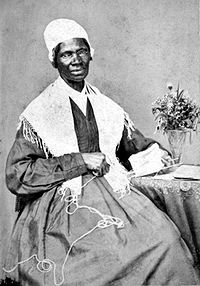
Sojourner Truth: Ain't I a Woman? (speech to the Women's Convention, Ohio, 1851)

John Newton: Thoughts Upon the African Slave Trade (1788)
ADVOCACY: Human Trafficking (from the Women’s Ministries Office at the Episcopal Church Center that supports women in the Episcopal Church and the wider world.)
Subscribe to:
Posts (Atom)