Tuesday, June 12, 2018

Tackling Racial (and other) Bias Today

How we tackle our bias is important.

Starbucks began to address this, you can find their work here:

https://starbuckschannel.com/thethirdplace/
https://dcl24jcpeau8t.cloudfront.net/media/channel/2018/05/30/sbux_team_guidebook-5_30.pdf

I found this article to be very enlightening: 

How Mindfulness Can Defeat Racial Bias

An excerpt:

Research shows that mindfulness practices help us focus, give us greater control over our emotions, and increase our capacity to think clearly and act with purpose. Might mindfulness assist police and other public servants in minimizing the mistaken judgments that lead to such harms? Might they help the rest of us—professors and deliverymen alike—minimize our biases as well?

In a word, yes. The good news is that mindfulness and related practices do assist in increasing focus and raising awareness, and have been shown to assist in minimizing bias. While the research is ongoing, studies are beginning to show that mindfulness meditation and compassion practices serve as potent aids in the work of decreasing bias.

We are called as Christians to use such mindfulness & prayer to decrease our bias and to help us love one another as God has loved us.

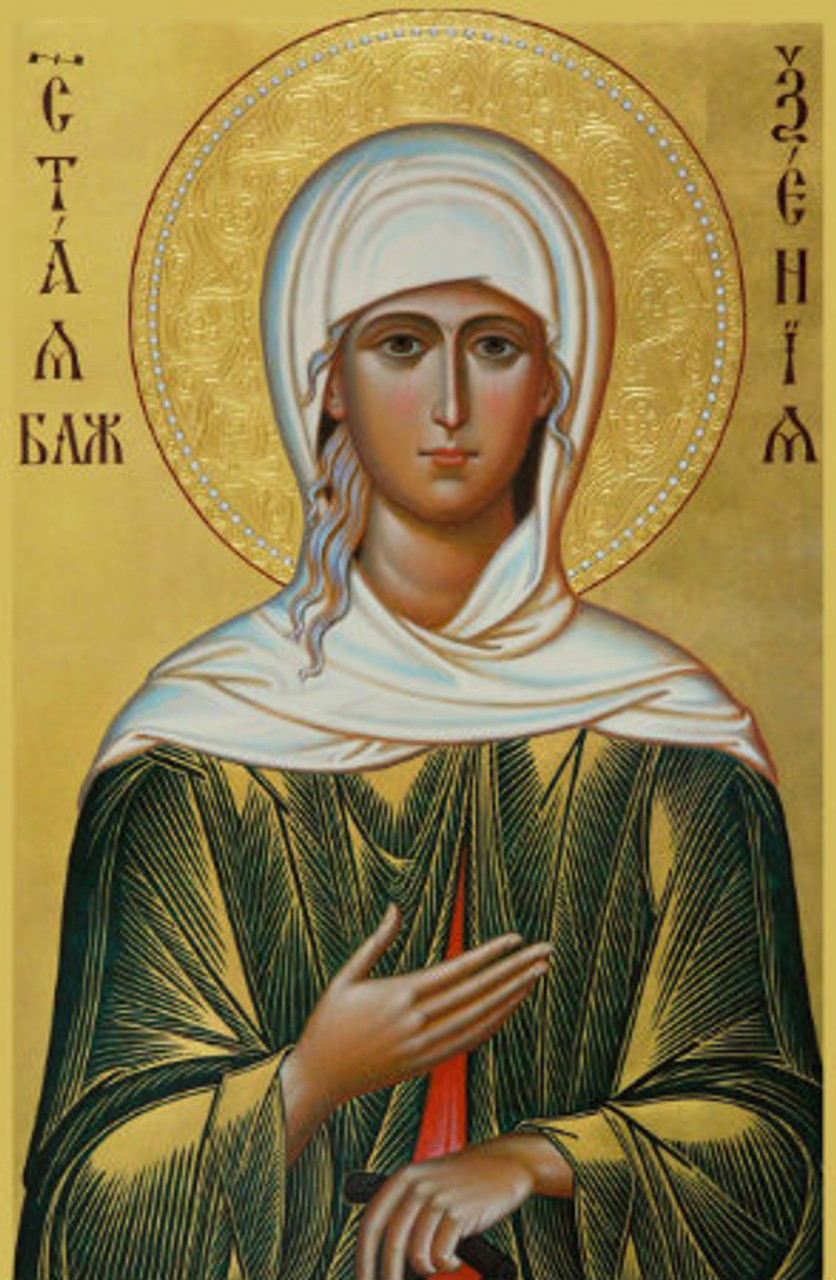
Holy Fools


St. Paul asked: “Where is the wise one? Where is the scribe? Where is the debater of this age? Has not God made foolish the wisdom of the world? For since, in the wisdom of God, the world did not know God through wisdom, it pleased God through the folly of what we preach to save those who believe.” (1 Corinthians 1: 20-21)

Get to know some of the Holy Fools:


Writings on the Holy Fools:

Sunday, June 3, 2018

Wendell Berry - A Poem About Hope and Place


There is a wonderful introduction of Wendell Berry by Bill McKibben, and also a segment where Berry introduces the poem, but if you only have time to hear the poem, it starts at 7:00. The poem follows:

It is hard to have hope. It is harder as you grow old,

For hope must not depend on feeling good
And there is the dream of loneliness at absolute midnight.
You also have withdrawn belief in the present reality
Of the future, which surely will surprise us,
…And hope is harder when it cannot come by prediction
Any more than by wishing. But stop dithering.
The young ask the old to hope. What will you tell them?
Tell them at least what you say to yourself.

Because we have not made our lives to fit
Our places, the forests are ruined, the fields eroded,
The streams polluted, the mountains overturned. Hope
Then to belong to your place by your own knowledge
Of what it is that no other place is, and by
Your caring for it as you care for no other place, this
Place that you belong to though it is not yours,
For it was from the beginning and will be to the end

Belong to your place by knowledge of the others who are
Your neighbors in it: the old man, sick and poor,
Who comes like a heron to fish in the creek,
And the fish in the creek, and the heron who manlike
Fishes for the fish in the creek, and the birds who sing
In the trees in the silence of the fisherman
And the heron, and the trees that keep the land
They stand upon as we too must keep it, or die.

This knowledge cannot be taken from you by power
Or by wealth. It will stop your ears to the powerful
when they ask for your faith, and to the wealthy
when they ask for your land and your work.
Answer with knowledge of the others who are here
And how to be here with them. By this knowledge
Make the sense you need to make. By it stand
In the dignity of good sense, whatever may follow.
Speak to your fellow humans as your place
Has taught you to speak, as it has spoken to you.
Speak its dialect as your old compatriots spoke it
Before they had heard a radio. Speak
Publicly what cannot be taught or learned in public.

Listen privately, silently to the voices that rise up
From the pages of books and from your own heart.
Be still and listen to the voices that belong
To the streambanks and the trees and the open fields.
There are songs and sayings that belong to this place,
By which it speaks for itself and no other.

Found your hope, then, on the ground under your feet.
Your hope of Heaven, let it rest on the ground
Underfoot. Be it lighted by the light that falls
Freely upon it after the darkness of the nights
And the darkness of our ignorance and madness.
Let it be lighted also by the light that is within you,
Which is the light of imagination. By it you see
The likeness of people in other places to yourself
In your place. It lights invariably the need for care
Toward other people, other creatures, in other places
As you would ask them for care toward your place and you.

No place at last is better than the world. The world
Is no better than its places. Its places at last
Are no better than their people while their people
Continue in them. When the people make
Dark the light within them, the world darkens.
-Wendell Berry

Our Lady against all Gun Violence (Mother of Sorrows)


Ferguson Mother of God: Our Lady against all Gun Violence, 2015
Acrylic Collage painting © Mark Dukes

From Sojourners:
Fr. James Martin, S.J., a Jesuit priest and popular author and speaker, shared July 9 on Facebook  an icon of “Our Lady of Ferguson and All Those Killed by Gun Violence.”

In the icon, Mary is depicted as a black woman with her hands up. Where her womb would be is a small black silhouette of Jesus in a similar posture, but in the crosshairs of a gun.

The posture, while a clear reference to the “Hands up, don’t shoot” slogan birthed in Ferguson, Mo., in response to police violence, is also the “orans” position of prayer, as Fr. Martin explained. Orans, which in Latin means “praying,” is a position that designates pleading or supplication to God.

“Essentially an icon is an invitation to prayer and meditation,” Fr. Martin wrote.

“Our Lady prays for all who are targeted by gun violence: African-Americans, the poor and marginalized, and police officers. All are her children. All are our brothers and sisters. Let us ask Our Lady to pray for us.”

Icons are commonly described as “written,” not “painted.” The Our Lady of Ferguson was written by Mark Dukes*. It was commissioned by the Rev. Dr. Mark Francisco Bozzuti-Jones of Trinity Church Wall Street.

This is not the only icon written in response to recent acts of violence. Nikola Saric, a Serbian artist, wrote a haunting icon in response to the martyrdom of 21 Christians who were beheaded by ISIS in February 2015.

*Mark Dukes discovered Byzantine styled icons in his twenties after leaving art school to go on a spiritual quest. He investigated a calling to be a monk in an Eastern Orthodox monastery in Texas where he saw Byzantine styled icons for the first time. He fell in love with the form and continued to 'write' icons even after he decided that he didn't have a calling to be a monk and had left the monastery. He has been blessed to have worked on the iconographic programs of two nationally recognized churches- St. Gregory of Nyssa Episcopal Church and the St. John Coltrane African Orthodox Church- both of San Francisco.  Through these projects, his work has been featured in national magazines such as Vibe, The Wall Street Journal and The New York Times Magazine.
(https://www.requiemfor10000souls.com/mark-dukes-bio-page/)

#LoveWelcomes - Our Refugee Welcome Mat


YOU CAN FLEE WAR, BUT THE VIOLENCE DOESN’T STOP THERE

The current refugee crisis has women and their children trading an unsafe home for unknown waters.

With almost nothing but a life vest, they arrive in an unfamiliar world in search of a new life.
Women refugees have come together with Thistle Farms to start the first social enterprise in Ritsona, Greece. Women are weaving welcome mats that include the fabric from life vests worn by refugees on their journey to Greece. Thistle Farms has partnered with I AM YOU to help women gain economic freedom.

The Welcome Project is committed to helping women find their path forward. Your purchase is our opportunity to offer them safe harbor and help navigate their new life. Thank you for joining us in believing that love is the greatest force for change in the world.


[Our welcome mat purchase is hanging on our altar.]


Collect for Refugees

God our Creator: We ask for your loving presence and for your peace to be with refugees in our local communities and around the world. Be with all who live in fear. Be with those whose lives and livelihoods are under threat, and whose religious freedoms are being compromised. Be with us as we strive to enact your will in our welcome and support of refugees. Give us strength and courage to be witnesses to your love. Guide us to be advocates and servants, ministers of welcome and bearers of hope, especially for those seeking refuge. In your Holy name we pray. Amen.

(This Prayer for Refugees was shared by the Refugee Community Center at the Episcopal Church of the Mediator (Allentown), Diocese of Bethlehem, slightly adapted)

Sermon: June 3

O God, in the course of this busy life, give us times of refreshment and peace; and grant that we may so use our leisure to rebuild our bodies and renew our minds, that our spirits may be opened to the goodness of your creation; through Jesus Christ our Lord. Amen. (BCP)

Jesus said, “The Sabbath was made for humankind, and not humankind for the Sabbath.”

The Sabbath was made for us, to give us time of refreshment and peace. But it is a neglected piece of our lives today. We seem so rushed that we forget to take the Sabbath rest time. So many of us feel anxious and exhausted from our schedule that our life so often seems way too full, Sabbath was meant to give us break from all of that.

In her book Einstein and the Rabbi: Searching for the Soul, Rabbi Naomi Levy writes about Henry, a member of her congregation. Henry's internet startup was booming - he was making more money than he'd ever dreamed of. He was thirty-six, happily married with an adorable, energetic son.

"But something's missing," Henry told the rabbi. "I've got no right to complain. I feel like I've won the jackpot - health, love, family, success . . . [yet] I feel empty inside. It's sort of a nagging feeling like I've forgotten something, but I don't know what I've forgotten."

As Henry and the rabbi talked, Henry admitted that he was constantly distracted at home. He was always connected to either his phone or tablet. Playing with his son, having dinner with his family, going to bed at night - he was always "plugged into" the office and never completely engaged with his family.

Rabbi Levy said, "Maybe the thing you've forgotten is your soul and your soul's connection to the people you love."

"But, Rabbi," Henry said, "I'm living my dream."

"Henry," Rabbi Naomi responded, "your soul may have other dreams."

The rabbi asked how Henry and his family experienced the Sabbath. Henry hesitated. So, the rabbi said, "You've come here for my help, and here is my suggestion: try to experience a Sabbath day." And the rabbi and Henry talked about Henry turning off his "work mind" for a day and the whole family unplugging from technology, about lighting Sabbath candles on Friday nights as a way to welcome sacred time and a festive meal at home.

Rabbi Naomi did not hear from Henry for several weeks. Then he called. So how are the Sabbaths going?

"The first Friday night I just kept reaching for my phone, so I finally turned it off. But, Rabbi, it felt like an amputated limb. I kept listening for it and looking for it."

But?

"I feel like a father for the first time. I think I was just faking it before. I love playing with Jake and reading books and looking into his eyes . . . No more tech in bed, that's our new thing. I go to bed holding her in my arms.

"The weird part," Henry said, "is that taking Friday night as a Sabbath is actually affecting all the days of the week. The nagging feeling, it's gone. I feel rich." "You are rich," Rabbi Naomi said."

Naomi Levy describes the Sabbath as "the soul of the week":

"Some think of the Sabbath as a day of prohibitions - you can't do this and you can't do that. But the Sabbath is actually a day of permission. A day when we give our souls permission to dream again. How long can we keep racing around, spreading ourselves so thin, contorted by stress and worry? There's so much within our grasp that we keep missing." She writes.

The Sabbath was made for humankind.

But Jesus doesn’t stop there. On the Sabbath day, in the synagogue, he heals a man. Many are angry for his violation of the rule not to work (heal) on the Sabbath. Jesus said to them, “Is it lawful to do good or to do harm on the Sabbath, to save life or to kill?”

Jesus' healing on the Sabbath challenges the synagogue community's understanding of the Sabbath. They saw the day as a proscription from God when, in fact, the Sabbath is a gift from God. It is to do good. Save lives. Even our own.

The Sabbath is a time not to avoid but to do, to re-connect, to embrace the joys and meaning of life that the busyness of the rest of the week forces us to put aside. The busyness that too often helps us forget the people most important to us. Sabbath time helps us reconnect with our loved ones and to do good to all whom we meet.

The Sabbath - our Sunday - is God's "permission," God's blessing to stop and rediscover the wonder of his gift of time to all of us and the love that is ours to give and receive within that gift.

On this Sabbath, let us pause from the rush of life, and rest in this gracious gift from God.

Let me end with a Mary Oliver Poem…

“Just a minute,” said a voice…
By Mary Oliver

“Just a minute,” said a voice in the weeds.
So I stood still
in the day’s exquisite early morning light
and so I didn’t crush with my great feet
any small or unusual thing just happening to pass by
where I was passing by
on my way to the blueberry fields,
and maybe it was the toad
and maybe it was the June beetle
and maybe it was the pink and tender worm
who does his work without limbs or eyes
and does it well
or maybe it was the walking stick, still frail
and walking humbly by, looking for a tree,
or maybe, like Blake’s wondrous meeting, it was
the elves, carrying one of their own
on a rose-petal coffin away, away
into the deep grasses. After awhile
the quaintest voice said, “Thank you.”

And then there was silence.
For the rest, I would keep you wondering.

(Listen to God's voice in the silence saying, wait a minute...)
Amen.

Saturday, June 2, 2018

#WearOrange #GunViolence


Collect for Victims of Violence

God of all mercy, who weeps with us as we anguish over lives broken and lost to the gun violence which so pains our community: Open our ears that we might hear their cries; Open our eyes that we might see their fears; Open our hearts that we might embrace them in love; and Open our arms that we might protect them from all harm; through Jesus Christ our Lord. Amen.

(by The Rev. Marc D. Smith)