Wednesday, August 15, 2007

St. Mary the Virgin

The honor paid to Mary, the Mother of Jesus Christ, goes back to the earliest days of the Church. Two Gospels tell of the manner of Christ’s birth, and the familiar Christmas story testifies to the Church’s conviction that he was born of a virgin.

In Luke’s Gospel, we catch a brief glimpse of Jesus’ upbringing at Nazareth, when the child was
wholly in the care of his mother and his foster-father, Joseph. During Jesus’ ministry in Galilee, we learn that Mary was often with the other women who followed Jesus and ministered to his needs. At Calvary, she was among the little band of disciples who kept watch at the cross. After the resurrection, she was to be found with the Twelve in the upper room, watching and praying until the coming of the Spirit at Pentecost.

Mary was the person closest to Jesus in his most impressionable years, and the words of the Magnificat, as well as her humble acceptance of the divine will, bear more than an accidental resemblance to the Lord’s Prayer and the Beatitudes of the Sermon on the Mount.

Later devotion has claimed many things for Mary which cannot be proved from Holy Scripture. What we can believe is that one who stood in so intimate a relationship with the incarnate Son of God on earth must, of all the human race, have the place of highest honor in the eternal life of God. A paraphrase of an ancient Greek hymn expresses this belief in very familiar words: “O higher than the cherubim, more glorious than the seraphim, lead their praises, alleluia.” (from Lesser Feasts and Fasts)

O God, you have taken to yourself the blessed Virgin Mary, mother of your incarnate Son: Grant that we, who have been redeemed by his blood, may share with her the glory of your eternal kingdom; through Jesus Christ our Lord, who lives and reigns with you, in the unity of the Holy Spirit, one God, now and for ever. Amen.

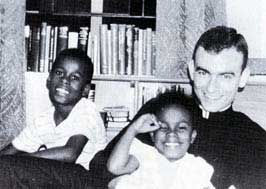
Remembering Jonathan Daniels

Jonathan Myrick Daniels was born in Keene, New Hampshire, in 1939. He was shot and killed by a deputy sheriff in Hayneville, Alabama, August 20, 1965.

From high school in Keene to his years at VMI and graduate school at Harvard, Jonathan wrestled with the meaning of life and death and vocation. Attracted to medicine, the ordained ministry, law and writing, he found himself close to a loss of faith when his search was resolved by a profound conversion on Easter Day 1962 at the Church of the Advent in Boston. Jonathan then entered the Episcopal Theological School in Cambridge, Massachusetts. In March 1965, the televised appeal of Martin Luther King, Jr. to come to Selma to secure for all citizens the right to vote drew Jonathan to a time and place where the nation’s racism and the Episcopal Church’s share in that inheritance were exposed. Conviction of his calling was deepened at Evening Prayer during the singing of the Magnificat: “‘He hath put down the mighty from their seat and hath exalted the humble and meek. He hath filled the hungry with good things.’ I knew that I must go to Selma. The Virgin’s song was to grow more and more dear to me in the weeks ahead.”

He returned to seminary and asked leave to work in Selma where he would be sponsored by the Episcopal Society for Cultural and Racial Unity. Jailed on August 14 for joining a picket line, Jonathan and his companions were unexpectedly released. Aware that they were in danger, four of them walked to a small store. As sixteen-year-old Ruby Sales reached the top step of the entrance, a man with a gun appeared, cursing her. Jonathan pulled her to one side to shield her from the unexpected threats. As a result, he was killed by a blast from the 12-gauge gun.

The letters and papers Jonathan left bear eloquent witness to the profound effect Selma had upon him. He writes, “The doctrine of the creeds, the enacted faith of the sacraments, were the essential preconditions of the experience itself. The faith with which I went to Selma has not changed: it has grown. . . . I began to know in my bones and sinews that I had been truly baptized into the Lord’s death and resurrection. . . with them, the black men and white men, with all life, in him whose Name is above all the names that the races and nations shout. . . .We are indelibly and unspeakably one.”

Taken from Lesser Feasts & Fasts of the Episcopal Church, 2003.

“A Christian martyrdom is never an accident, for Saints are not made by accident. Still less is a Christian martyrdom the effect of man's will to become a Saint, as a man by willing and contriving may become a ruler of men. A martyrdom is always the design of God, for His love of men [and women], to warn them and to lead them, to bring them back to His ways. It is never the design of man; for the true martyr is he who has become the instrument of God.” (T.S. Eliot, Murder in the Cathedral)

For more see my sermon from Sunday, August 12.

Marchers commemorate death of rights martyr by Alvin Benn

Jonathan Daniels' violent death was commemorated Saturday in 103-degree heat by 200 marchers honoring the white seminary student who gave up his life to save a black teenage girl 42 years ago. Read it all here.

Monday, August 13, 2007

Communion Matters

A discussion on Communion Matters will take place after the Sunday services of August 19 & 26.

The Theology Committee of the Episcopal Church's House of Bishops on June 1 released a study document aimed at helping the bishops respond to the requests made to them by the Primates of the Anglican Communion.

Bishop Smith has asked each congregation to engage in a discussion of the document and to let him know of our response.

The 15-page "Communion Matters: A Study Document for the Episcopal Church" is available online. A color PDF version of the document is available here. A black-and-white PDF version is here.

You can find additional documents and links to help with the study document here.

Sermon: August 12

[The Scripture readings for Sunday can be found here.]

Just a week ago I was Gazing at the Green Mountains of Vermont
-enjoying a nice cold beverage
-leisurely, without a care in the world…
-kids playing in the pond, catching frogs
-it is what vacation is all about…

Some R&R, we all need it, even Jesus went away from his ministry to rejuvenate, to get some R&R with friends or up on a mountain…

But as I read this week’s Gospel, I was reminded that Jesus often couches his calls of discipleship in terms that will not gently bring us in, he calls us into action, right now. Jesus said, “Be dressed for action and have your lamps lit; be like those who are waiting for their master to return from the wedding banquet… You must be ready, for the Son of Man is coming at an unexpected hour.” We must always be aware that our call to discipleship, to follow Jesus, is never meant to be brushed aside until we have time, forgotten about, wait until fall but engaged each and every day of our lives. For sometimes, the Holy Spirit moves us to engage our world right now.

In March 1965, Jonathan Myrick Daniels sat in the chapel at the Episcopal Theological School in Cambridge, MA trying to decide whether or not to heed the call of Dr. Martin Luther King, Jr, who asked clergy, students and others to join him in Selma, Alabama for a march to the state capital in support of his civil rights program. The Magnificat, the Song of Mary, is one of the canticles that is sung or said at the Evening Prayer service.

Jonathan Daniels wrote: “I had come to Evening Prayer as usual that evening, and as usual I was singing the Magnificat with the special love and reverence I have always felt for Mary's glad song… Then it came. "He hath put down the mighty from their seat, and hath exalted the humble and meek. He hath filled the hungry with good things." I knew then that I must go to Selma. The Virgin's song was to grow more and more dear in the weeks ahead.”

Jonathan Daniels and others would travel from Cambridge to Selma. They participated in the march. After returning to the seminary for final exams, Jonathan and some others continued working in Alabama for several months helping with the civil rights movement. They stayed with local families, registered African Americans to vote, protested and marched, and tried to visit local Episcopal Churches. Most saw them as outside agitators and Jonathan and the families with him were often rudely treated at church. Arrested on August 14 during a march in Fort Deposit, Alabama, the group was released on August 20, as he and three others approached a local grocery store, Jonathan was shot and killed by a deputy sheriff in Hayneville, Alabama. His last act was to thrust Ruby Sales, a young African American woman, out of the path of the gunfire that took his life and seriously wounded another civil rights worker.

Martin Luther King Jr. said, "One of the most heroic Christian deeds of which I have heard in my entire ministry and career for civil rights was performed by Jonathan Daniels." And Jonathan Daniels was led to the South by the Holy Spirit as he sang the Magnificat early in 1965. I first became acquainted with Jonathan Daniels in an article in a magazine I was reading in college. His life and his faithful witness have always struck me as what God calls all of us to do as disciples of Jesus.

Not that we all should be martyrs in the sense that we need to die to show our faith. But the word martyr, from the Greek means witness and in one sense we are all called to be martyrs. Jonathan understood this and put his life on the line to witness to his faith by helping with the civil rights movement. In the words of T.S. Eliot… “A Christian martyrdom is never an accident, for Saints are not made by accident. Still less is a Christian martyrdom the effect of man's will to become a Saint, as a man by willing and contriving may become a ruler of men. A martyrdom is always the design of God, for His love of men [and women], to warn them and to lead them, to bring them back to His ways. It is never the design of man; for the true martyr is he who has become the instrument of God.” (T.S. Eliot, Murder in the Cathedral)

August 14 is the day we remember Jonathan Daniels’s witness in the Episcopal Church. Jonathan shares August 14 with another martyr of the 20th Century, Maximilian Kolbe, a RC priest imprisoned in WW II in Auschwitz. After a man escaped from the death camp, the SS condemned 10 men from the same barrack to be starved. Kolbe took the place of one of those men when he heard the man’s anguish cries about his family. Kolbe died on August 14, 1941.

The man, Franciszek Gajowniczek, and his wife, Helena, survived the war. In 1993, he said, “so long as he had breath in his lungs, he would consider it his duty to tell people about the heroic act of love by Maximilian Kolbe.” In the Chapel of Saints and Martyrs of Our Own Time at Canterbury Cathedral in England, Maximilian Kolbe name appears alongside Dietrich Bonhoeffer, Martin Luther King Jr., and Jonathan Daniels. Jonathan and Maximilian were both instruments of God, who helped us see the horrors of oppression and evil that existed in our society. They each saved a life, Ruby & Franciszek, by their actions.

And that is what discipleship is all about, giving life to ourselves and our world by our faithful action. For we are called by Jesus to be ready, to be witnesses to our faith, for as the letter to the Hebrews reminds us, “faith is the assurance of things hoped for, the conviction of things not seen.” And our witness to our faith is to be people who share heroic acts of love, just like Jesus and Jonathan and Maximilian by living out our Christian faith in our everyday lives.

Let us end, by saying together the prayer for August 14 commemorating the witness of Jonathan Myrick Daniels:

O God of justice and compassion, who put down the proud and the mighty from their place, and lift up the poor and afflicted: We give you thanks for your faithful witness Jonathan Myrick Daniels, who, in the midst of injustice and violence, risked and gave his life for another; and we pray that we, following his example, may make no peace with oppression; through Jesus Christ the just one: who lives and reigns with you and the Holy Spirit, one God, for ever and ever. Amen.

Tuesday, August 7, 2007

Stop Trying To 'Save' Africa

The head of Episcopalians for Global Reconciliation (the Rev. Mike Kinman) wrote this:
I know a lot of you are working on the MDGs in your congregations and elsewhere. Well, this article from the Washington Post should be required reading for everyone working with the MDGs and global mission. It gets to the heart of the unique gifts the Church has to bring to the Millennium Development Goals. As Christians, we see people not as economic entities or as things broken that need to be fixed. We see each person as a uniquely gifted creation of the divine, bearing the image of God. For us as Christians, the work of the MDGs is about all of us bringing our gifts to the table and seeing where God is calling us to use those gifts together for the building up of the whole Body of Christ and the healing of the whole world. For us as American Christians, the most important virtue we need to bring to the table is not material generosity (though that is important, too), but humility.

To that I add, Amen.

Read the article:

Stop Trying To 'Save' Africa By Uzodinma Iweala
Sunday, July 15, 2007

Last fall, shortly after I returned from Nigeria, I was accosted by a perky blond college student whose blue eyes seemed to match the "African" beads around her wrists.

"Save Darfur!" she shouted from behind a table covered with pamphlets urging students to TAKE ACTION NOW! STOP GENOCIDE IN DARFUR!

My aversion to college kids jumping onto fashionable social causes nearly caused me to walk on, but her next shout stopped me.

"Don't you want to help us save Africa?" she yelled.

It seems that these days, wracked by guilt at the humanitarian crisis it has created in the Middle East, the West has turned to Africa for redemption. Idealistic college students, celebrities such as Bob Geldof and politicians such as Tony Blair have all made bringing light to the dark continent their mission. They fly in for internships and fact-finding missions or to pick out children to adopt in much the same way my friends and I in New York take the subway to the pound to adopt stray dogs.

This is the West's new image of itself: a sexy, politically active generation whose preferred means of spreading the word are magazine spreads with celebrities pictured in the foreground, forlorn Africans in the back. Never mind that the stars sent to bring succor to the natives often are, willingly, as emaciated as those they want to help.

Read the entire article here

Monday, August 6, 2007

Eight Ways to live the MDGs

A great article from Trinity Wall Street!

Eight Ways to live the MDGs by Sarah Grapentine

Sarah Grapentine is program assistant for the Trinity Grants Program and a participant in the Trinity Academy of Servant Leadership.

This article appears in the Transformation issue of Trinity News (the magazine of Trinity Church - St. Paul's Chapel).

The Episcopal Church is abuzz about the Millennium Development Goals. The MDGs are the United Nations’ goals for eradicating extreme poverty, empowering women, providing primary education, creating environmental sustainability, and combating disease. These goals can seem pretty big — and they are. But a small change can be part of a big difference — even in our individual, daily lives.

Break the (piggy) bank. The Episcopal Church has committed 0.7% of its budget to programs that support the Millennium Development Goals, and is asking you to do the same. But where to find this money on top of your other charitable donations? Pocket change can really add up: in 2004, users of Coinstar’s coin counting machines donated $3 million in spare change for charity.

A woman’s place is in the marketplace. Donate those pennies to a microfinance program helping women start small businesses. Why specifically empower women? Studies show that overall family welfare, including children’s nutritional status, is likely to be higher when microfinance is provided to women rather than men. Try www.kiva.org, and become a microfinancier. Browse microloan applicants from around the world and make a $25 loan directly to the small businesses of your choice, get updates on their progress, and even see the profiles of other lenders supporting that business.

Change with the seasons. Respect the natural change of the seasons when you sit down to dinner. Rather than buying products out-ofseason, shipped from far-off places, connect with a local farmer through a Community Supported Agriculture organization like Just Food . Over the course of a season, you can get 40 different types of vegetables, all locally grown. Some farmers will even take your biodegradable garbage away as compost for the crops.

Give gifts that are fairly traded. It’s more than just coffee. From soccer balls to wine to flower seeds, it’s all available online. Serve Episcopal Relief and Development’s Bishop’s Blend coffee at your next parish meeting. To see the future of fair trade, jump the pond to the British website www.traidcraftshop.co.uk

Write a letter. We all receive emails asking us to write letters to our congressperson regarding issues we care passionately about, but how often do we follow through? Print one such request and stick it with your bills. At the end of the month, when you sit down with your bills in hand and your envelopes out, you’re already in the groove!

Travel widely and responsibly. Seeing the world can change the way you see your role in it, and your tourism dollars can really help too. Want to do more? Balance your carbon footprint by building a TerraPass into your vacation budget. For under $40, you can sponsor a reduction in greenhouse gas emissions that is directly proportional to the emissions created by your plane flight.

Complete the cycle. Support recycling long before your paper hits the blue bin by purchasing products that are 100% post-consumer recycled. This means the paper is made entirely from the contents of your trusty recycling bin, and not mixed with virgin tree fiber. Most office-supply chains carry it in their stores or on the environmentally-friendly section of their websites.

Connect with others. Build your own partnerships for development by seeking out others who are interested in the MDGs. Find inspiration and recharge your batteries by getting together regularly. A support network will keep you motivated and, most importantly, keep you thinking.

To receive a free subscription to the print edition of Trinity News, send your mailing address to news@trinitywallstreet.org.

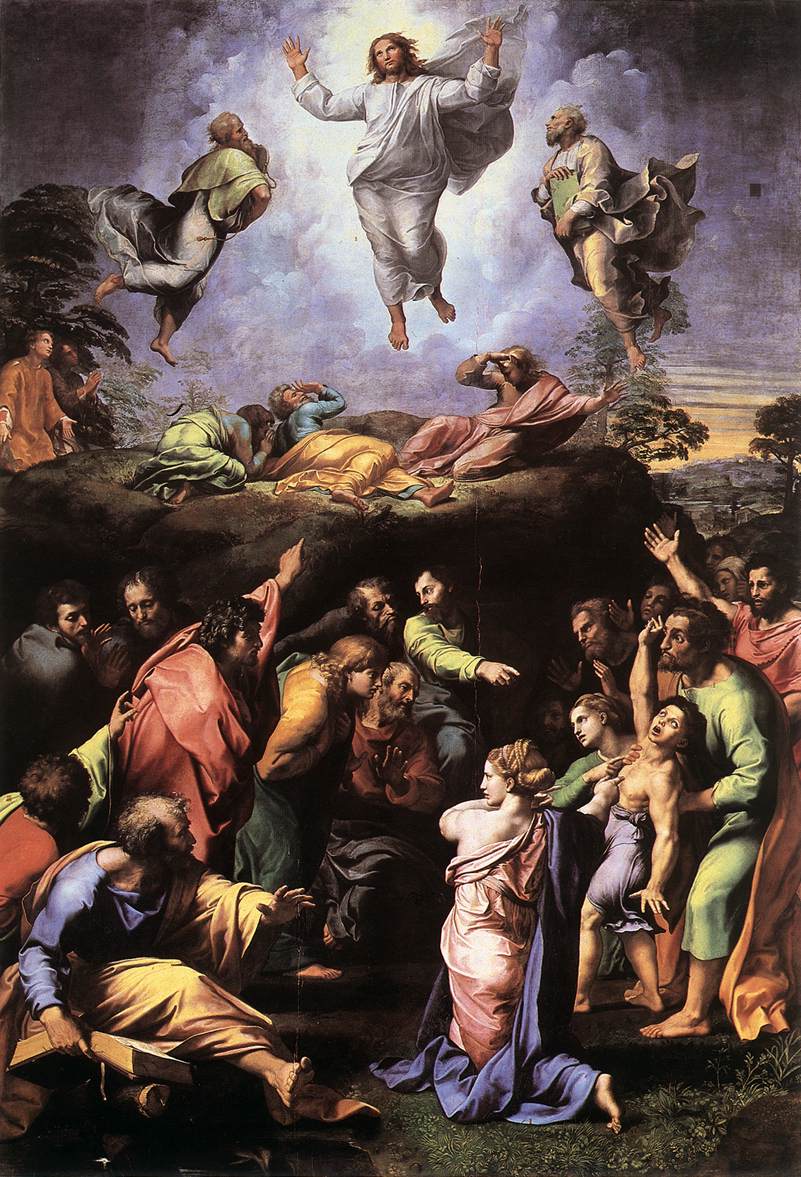
Transfiguration of our Lord

O God, who on the holy mount revealed to chosen witnesses your well-beloved Son, wonderfully transfigured, in raiment white and glistening:

Mercifully grant that we, being delivered from the disquietude of this world, may by faith behold the King in his beauty; who with you, O Father, and you, O Holy Spirit, lives and reigns, one God, for ever and ever. Amen.

from Luke 9:28-36

About eight days after Jesus had foretold his death and resurrection, Jesus took with him Peter and John and James, and went up on the mountain to pray. And while he was praying, the appearance of his face changed, and his clothes became dazzling white. Suddenly they saw two men, Moses and Elijah, talking to him. They appeared in glory and were speaking of his departure, which he was about to accomplish at Jerusalem. Now Peter and his companions were weighed down with sleep; but since they had stayed awake, they saw his glory and the two men who stood with him. Just as they were leaving him, Peter said to Jesus, "Master, it is good for us to be here; let us make three dwellings, one for you, one for Moses, and one for Elijah"--not knowing what he said. While he was saying this, a cloud came and overshadowed them; and they were terrified as they entered the cloud. Then from the cloud came a voice that said, "This is my Son, my Chosen; listen to him!" When the voice had spoken, Jesus was found alone. And they kept silent and in those days told no one any of the things they had seen.