Wednesday, June 10, 2020

Hope and Challenge for the Episcopal Church on dismantling white supremacy and racism


On Monday, Bishop Jennifer Baskerville-Burrows gave this reflection on a Zoom meeting with bishops and canons from across the Episcopal Church. Rev. Kurt used part of this for his noonday prayer mediation:

Ibram X. Kendi recently wrote in The Atlantic: “From the beginning, racist Americans have been perfectly content with turning nightmares into dreams, and dreams into nightmares; perfectly content with the law of racial killing and the order of racial disparities. They can’t fathom that racism is America’s nightmare. There can be no American dream amid the American nightmare of anti-black racism—or of anti-Native, anti-Latino, anti-Asian racism—a racism that causes even white people to become fragile and die of whiteness.”

Thank you, Presiding Bishop, Canon Stevenson and Bishop Ousley for the invitation to speak today. In the brief time I have, I want to share a little bit about my experience. I’m not an expert on dismantling systemic racism and anti-blackness. I’m not an expert on unlearning the messages that are continually and consistently telegraphed reminding me that my dark skin is not as valued as white skin. But I am expert on my life and my story, and I want to share a bit of it with you and then name the hope and challenges before us.

The part of my story that is fairly public knowledge is that I was born and raised in New York City—the granddaughter of Shinnecock Indians on one side and sharecropping descendants of slaves on the other. The first ten years we lived in Boerum Hill, Brooklyn—and I attended a diverse elementary school with black, white and Latina teachers and black, white, Puerto Rican and Jewish classmates. We had next to no money but a lively neighborhood where the owners of the mom and pop stores knew the name of every kid.

When I was ten, we moved to Staten Island, and I’ve never gotten over it. We were now living in a segregated space. White kids took the yellow school buses to our junior high school, and black and brown kids mostly took the city bus or walked the seven blocks to school. Many days, as I walked home alone, there were older white kids and adults who would spit at me and call me the n-word. Each Friday there would be reports of the “race riots’” at one of the local high schools—meaning, blacks and whites fighting after school, every week. I figured out by seventh grade that testing out and getting to a specialized school in Manhattan would be a better choice because I didn’t want to deal with that kind of racism. So I commuted an hour and half each way taking a bus, ferry and subway train to midtown Manhattan for high school where the diverse world opened back up for me.

For whatever reason, talking about race, building bridges, having friendship groups that looked the like Benetton ads of the 1980s has been my lot for over 40 years. And I’m tired because I’ve spent my life pushing away and unlearning the messages that whites and black can’t be real family and friends, but too many white folks won’t do the work of unlearning those same messages. I’m tired of the burden white supremacy places on me and the black and brown people I love. I’m tired of black folks bearing the symptoms of white sickness. This exhaustion is not two weeks old or global pandemic old. Black and brown people spend our lives learning to live with the exhaustion of white supremacy as a survival mechanism.

Yes, I can remember the first time, back in 1982, my uncle was pulled over driving his BMW home from work because he was a black man in too nice a car. Yes, I’ve had police in my predominately white neighborhood run my plates. Yes, I’ve already had “the talk” with my nine-year-old black son about what to do if approached by the police and how he can’t play with water pistols like his white friends. Here’s the thing, every black and brown person in this country, on this call, in our congregations, has stories like these. The black and brown folks with Ivy League degrees who show up to our churches in nice dresses and suits have these stories as surely as the black and brown folks we cross the street to avoid.

We have these stories and we have not often told them outside of black and brown circles. There are experts who can better explain why, but I suspect that it has something do with the fact that it is hard to tell the stories of racial trauma to the people who have the power to make things different and won’t. And when we have told the stories, long before there was the internet and hashtags, we were too often told to get over it, stop playing the race card, and conform. The videos we now see played over and over again of the killings and abuses for just living while black have finally awakened those with the power to change things, and I hope and pray policies and behavior begin to change. Hope and challenge are two sides of the same coin. Across the globe people are risking their health in the midst of a pandemic to hold police departments, cities and corporations accountable to changing policies embedded in racist structures. This is gospel work. And the church is not exempt.

So here is the challenge for the Episcopal Church: we need to stop being afraid of committing to the work of dismantling systemic racism and white supremacy. We need to learn and understand how it operates inside the Episcopal Church and in the world. As a predominately white institution that is rooted in the American experiment, we must be unequivocal and clear. When I go to the webpage of Ben and Jerry’s Ice Cream, it is clear that they are about selling ice cream and dismantling white supremacy. I want our church to be that clear. Our being afraid of making white people upset makes us complicit in keeping white supremacy in place. We must not be afraid of giving our time and financial resources to the groups who are doing this work on the ground.

Many of our congregations are made up of people who have the power to affect policies, programs and money—if we are not actively dismantling white supremacy as a part of our baptismal ministry, then we ought not write another statement. If we are not giving away our power and centering the voices on the margins, then we ought not be surprised when people of color stop sharing their stories and attending our churches. If we go to Black Lives Matter demonstrations but return to our church buildings to livestream worship surrounded exclusively by white images of Jesus and the saints, then we must understand that we contradict our actions and become just another performative ally not helping our people or the movement.

Now is the time for acting. For doing the work of unlearning bias against black and brown people. Our everyday choices from where we buy groceries, to what we read, to how we adorn our sanctuaries, to where our money goes, to how we vote all add up. It all adds up to a world where people and systems are activated to value and support all of God’s children no matter what they look like or where they come from and every choice moves us a little closer to God’s dream. Not just the American dream—God’s dream. So let’s get to work, church. The time is now. Thank you.

The Bishop Jennifer Baskerville-Burrows is the bishop of the Diocese of Indianapolis.

Sunday, June 7, 2020

Trinity Sunday Sermon Online

I bind unto myself the name,
The strong name of the Trinity;
By invocation of the same.
The Three in One, and One in Three,
Of whom all nature hath creation,
Eternal Father, Spirit, Word:
Praise to the Lord of my salvation,
salvation is of Christ the Lord. Amen.

Trinity Sunday is all about relationships…

The Trinity – F, S, and HS is all about their relationship and the mystical union of God.

The Scriptures for today reminds us about this union and our relationship to God. The challenge for us today is to remind ourselves that God made everyone in God’s image.

You and me.

Officer Derek Chauvin and George Floyd.

Sadly too often we forget that truth and too many people deny the dignity that God has given to others. As we saw when Officer Chauvin squeezed the life out of George Floyd.

The core of our faith is to take that truth seriously, that everyone is God’s creation and we need to respect the dignity of every human being.

In her book We Are All Shipwrecks, Kelly Grey Carlisle tells of being stopped by a young pregnant woman at the bus station near her church in San Antonio. The woman said she and husband needed to get to Austin and that she was $8 short for a bus ticket. Several people she had approached had already said no to her.

“How much does the ticket cost?” Kelly asked.

The woman explained that she and her husband had called ahead, and the bus company said the tickets were $20 each, but now they were told the tickets were $28. They only needed $8 more for her ticket.

Kelly didn’t have any cash but offered to pay for the ticket with her credit card.

“And we can give you the rest of the money back!” the woman said. “I’m sorry to bug you. I’m sorry to take up your time. My husband didn’t even want me to ask anybody.”

“It’s okay,” Kelly said. And the two walked over to the station.

“When are you due?” Kelly asked, trying to change the subject, not wanting the woman to feel embarrassed.

“I have two more months to go.”

When they got to the station, the woman said, “My husband’s round front,” and went to get him.

As Kelly waited, a man called to her. “Miss, Miss. Don’t listen to her.”

The woman returned. I don’t see my husband.”

Kelly offered to buy the ticket anyway and to forget about the money.

“Ma’am, I don’t want to keep you. I don’t want to waste your time.”

“It’s okay.”

Just then another woman came and up to the pregnant woman. “Here’s your eight bucks, honey. I found some for you.”

“Thank you” she said, taking the bills and holding them tightly in her fist.

“You’re welcome, honey.” And then the other woman left.

“So, you all set?” Kelly asked.

“Yes.”

Kelly wished her good luck and turned to go.

On her way out of the station, someone stopped Kelly. “I hope you didn’t give her any money. She’s a professional con woman.”

Kelly assured the man that she hadn’t. “Good!” the man replied.

But Kelly writes that if she had the cash on her, she would have given her the money, whether she was being conned or not.

“I didn’t see that pregnant woman . . . I saw my own mom, thirty-seven years ago, several months pregnant with me and just as desperate, if not more so. My father had just been put in jail. She lived in a motel. She would have lied for money; she would have done anything for us.

“That woman outside the Greyhound station was my mom. That cute little baby bump was me. I don’t care if she was lying or not.”

Kelly Carlisle’s own story enables her to see the pregnant young woman in the looking glass of God’s compassion; Kelly doesn’t see a con woman to be exposed but a desperate sister needing to be lifted up. Such understanding and empathy calls us to a very different perspective of God than we might have been taught or imagine.

I though of Kelly’s words after seeing the death of George Floyd. Did I see the victim as a father? As someone I knew? Or did I make assumptions about him?

Do we recognize a God of unfathomable love that finds no satisfaction in violence or retribution but envisions a world in which compassion and reconciliation thrive.

“One doesn’t have to operate with great malice to do great harm. The absence of empathy and understanding are sufficient.” ― Charles M. Blow, journalist and author

May we all become ministers and agents of such God-centered love, rising above our own egos, criticisms and judgments in order to re-create, with hope, purpose and healing, the world God has entrusted to us.

As we say in our own Baptismal Covenant: Will you strive for justice and peace among all people, and respect the dignity of every human being? I will, with God's help.

May it be so. Amen.

Saturday, June 6, 2020

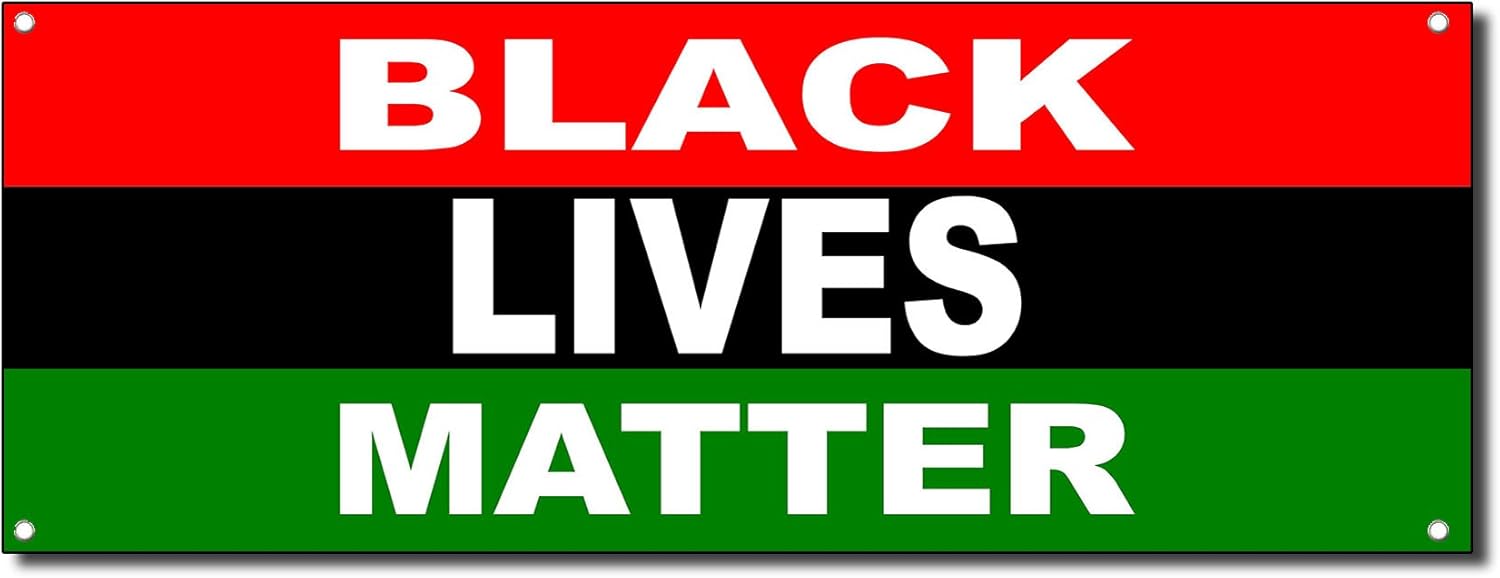
#BlackLivesMatter on the Monroe Green


Saturday – June 6 on the Green
Prayer:

from Steven Charleston
(Retired Episcopal Bishop, member of the Choctaw Nation)
Still the fires of our hearts, Spirit of peace, and temper the words we use. Calm our passions so that we may think more clearly. Let reason guide our actions and compassion remind us that we are all of one family. Help us focus on what is most important: justice for one man and health for thousands more. Come now, Spirit of healing, for there is much to be done to repair our community. Stop the violence. Subdue the virus. Open wide the path to our transformation. Pour out your love to anoint each one of us, whatever our politics may be, whichever side of the barrier we have stood on, that we may find that same love waiting for us in the world we remake together. Amen.

Response:
Anthony & Isabella arrived on the shores of this country along with at least 20 others in August of 1619 in an English vessel, The White Lion, having been taken captive from West central Africa. They were sold to Virginia’s governor and the colony’s supply officer in return for food and supplies.

In 1624, Anthony &, Isabella’s son, William, was baptized at the local Anglican Church in Hampton, Virginia. His baptized name was William Tucker due to the fact his parents worked on the land and were owned by Capt. William Tucker. No other records exist about this family or their second child.

William was baptized in a church like mine but was never seen as an equal part of the community, he was probably bought and sold to other farms, by white Christians who believed they had a right to do so.

400 years later we are still dealing with the scourge of slavery in this country.

“Slavery didn’t end in 1865, it evolved,” as Bryan Stevenson puts it.

Lynchings and segregation, red lining and mass incarceration.

We watched that same evil, squeeze the life out of George Floyd as he cried “I can’t breathe” and “Momma, I love you” (an evil that is still is attacking peaceful protestors)

Do we really believe black lives matter?

We rang our bells in this town for months, to celebrate our commonality & our hope during this pandemic. A pandemic that affected people of color in greater numbers.

And the ringing reminded me of the great English poet, John Donne, who heard the bell ringing from a nearby church & penned these words:

“any man's death diminishes me, because I am involved in mankind, and therefore never send to know for whom the bells tolls; it tolls for thee."

Our nation’s bells continue to ring for George Floyd and Breonna Taylor and Ahmaud Arbery…

They ring because racism continues to haunt us and exact a terrible toll on people of color. For we have not dealt with our history to make a better future for all.

In 1951, Langston Hughes wrote the poem Harlem, and it could have been written today…


What happens to a dream deferred?

Does it dry up
like a raisin in the sun?

Or fester like a sore—
And then run?

Does it stink like rotten meat?
Or crust and sugar over—
like a syrupy sweet?

Maybe it just sags
like a heavy load.

Or does it explode?

In 2020, it exploded after an unjust death. Do we really believe black lives matter?

For the sake of George Floyd, for the sake of all who have wrongly suffered, and for the sake of us all, we need to work together in the spirit of peace to be “one nation, under God, with liberty and justice for all.” Because Black Lives Matter!

Friday, June 5, 2020

Habit of Grace

June 5, 2020: For Quiet Confidence
 
Watch the Video

I had intended to do our Habits of Grace earlier this week on Monday or Tuesday, as I usually do, and then so many things began to happen, both in our country and in our wider world that I wasn't able to get to it.

In the midst of all that was going on, there were a few moments when so much was happening so fast and it was so chaotic, that at one point, I was on a Zoom call with a member of our staff and we were working on videos and interviews and it was so much and so chaotic, I remember just saying, "Let's just stop, and pray."

And the prayer I prayed was a prayer from our prayer book. It's toward the end of the prayer book on page 832 called “For Quiet Confidence”. This prayer is based on a time in the life of the prophet Isaiah, when the people of Judah and Jerusalem were living in a time when their country was in turmoil and things were uncertain and chaos seemed to be ruling.

The prophet Isaiah said, "You must remember that it is in returning and rest, that you will be saved; in quietness and confidence, you will find your strength." And this is the prayer we prayed and I offer it for all of us. Let us pray:

Oh, God of peace, who has taught us that in returning and in rest, we shall be saved; in quietness and in confidence shall be our strength. By the might of thy Spirit, lift us, we pray thee to thy presence, where we may be still and know that thou art God, through Jesus Christ, our Lord. Amen.

God love you and keep the faith.

Thursday, June 4, 2020

Wednesday Noon Meditations


Now is the moment for which a lifetime of faith has prepared you. All of those years of prayer and study, all of the worship services, all of the time devoted to a community of faith: it all comes down to this, this sorrowful moment when life seems chaotic and the anarchy of fear haunts the thin borders of reason. 

Your faith has prepared you for this. It has given you the tools you need to respond: to proclaim justice while standing for peace. Long ago the Spirit called you to commit your life to faith. Now you know why. You are a source of strength for those who have lost hope. You are a voice of calm in the midst of chaos. You are a steady light in days of darkness. The time has come to be what you believe. 

-Bp. Steven Charleston

“We but mirror the world. All the tendencies present in the outer world are to be found in the world of our body. If we could change ourselves, the tendencies in the world would also change. As a man changes his own nature, so does the attitude of the world change towards him. This is the divine mystery supreme. A wonderful thing it is and the source of our happiness. We need not wait to see what others do.” 

– Mahatma Gandhi


The right hand of God is writing in our land,
Writing with power and with love.
Our conflicts and our fears, our triumphs and our tears
Are recorded by the right hand of God.

The right hand of God is pointing in our land,
Pointing the way we must go.
So clouded is the way, so easily we stray,
But we’re guided by the right hand of God.

The right hand of God is striking in our land,
Striking out at envy, hate and greed.
Our selfishness and lust, our pride and unjust
Are destroyed by the right hand of God.

The right hand of God is lifting in our land,
Lifting the fallen one by one.
Each one is known by name, and rescued now from shame,
By the lifting of the right hand of God.

The right hand of God is healing in our land,
Healing broken bodies, minds and souls,
So wondrous is its touch, with love that means so much,
When we’re healed by the right hand of God.

The right hand of God is planting in our land,
Planting seeds of freedom, hope and love,
In these lands, let his people all join hands,
And be one with the right hand of God.

-Archbishop Desmond Tutu

Wednesday, June 3, 2020

Church Photo-Op


The following is a statement from Episcopal Church Presiding Bishop Michael Curry:


This evening, the President of the United States stood in front of St. John’s Episcopal Church, lifted up a bible, and had pictures of himself taken. In so doing, he used a church building and the Holy Bible for partisan political purposes. This was done in a time of deep hurt and pain in our country, and his action did nothing to help us or to heal us.

The bible teaches us that “God is love.” Jesus of Nazareth taught, “You shall love your neighbor as yourself.” The prophet Micah taught that the Lord requires us to “do justice, love mercy and walk humbly with our God.”

The bible the President held up and the church that he stood in front of represent the values of love, of justice, of compassion, and of a way to heal our hurts.

We need our President, and all who hold office, to be moral leaders who help us to be a people and nation living these values. For the sake of George Floyd, for all who have wrongly suffered, and for the sake of us all, we need leaders to help us to be “one nation, under God, with liberty and justice for all.”

Statement from the Bishops of the Episcopal Church in Connecticut:

 
Jesus said to them: “It is written, ‘My house shall be called a house of prayer’;” (Matthew 21:13)
When Jesus enters Jerusalem and cleanses the Temple he calls us to a right understanding of Holy Places as sacred to God and the honoring of God’s purposes. At a time when our country is being torn apart by violence caused by racism, Holy places hold out for us God’s dream of justice, wholeness, and peace. Churches and sacred symbols should not be used as political tools to foment division, alienation and violence. We join with the bishops of New England and the Presiding Bishop of The Episcopal Church in decrying the use of St. John’s, Lafayette Square and the Bible by the President for partisan political purposes. Our faith and our nation’s ideals call us to a higher vocation of genuine unity and justice for all.

The Rt. Rev. Ian T. Douglas, Bishop Diocesan
The Rt. Rev. Laura J. Ahrens, Bishop Suffragan


FOR IMMEDIATE RELEASE:

New England Episcopal bishops respond with one voice to President’s “cynical” photo-op by calling out “the abomination of continued oppression of and violence against people of color in this nation”

What President Trump did in front of St. John’s Episcopal Church, Lafayette Square on the evening of June 1 was disgraceful and morally repugnant. Displaying a Bible from which he did not quote, using as a mere backdrop an Episcopal church where he did not pray, and – more callously – ordering law enforcement to clear, with force and tear gas, a path through demonstrators who had gathered in peace, President Trump distorted for his own purposes the cherished symbols of our faith to condone and stoke yet more violence.

His tactic was obvious. Simply by holding aloft an unopened Bible he presumed to claim Christian endorsement and imply that of The Episcopal Church. Far more disturbingly, he seemed to be affecting the authority of the God and Savior we worship and serve, in order to support his own authority and to wield enhanced use of military force in a perverted attempt to restore peace to our nation.

His actions did nothing to mend the torn social fabric of our nation. Instead, they were a blatant attempt to drive a wedge between the people of this nation, and even between people of faith. No matter where we may stand on the partisan spectrum, we, as Christian leaders called to proclaim a God of love, find his actions repugnant. Jesus taught us to love our enemies, to seek healing over division, and make peace in the midst of violence.

Our church may rightly feel outraged and insulted by having the symbols of our faith used as a set prop in a cynical political drama. The real abomination before us, however, is the continued oppression of and violence against people of color in this nation. Let us reserve and focus the energies of our indignation to serve our Lord Jesus Christ’s higher purpose: to extend love and mercy and justice for all, and especially for those whose life, liberty, and very humanity is threatened by the persistent sin of systemic racism and the contagion of white supremacy.

The Rt. Rev. Laura J. Ahrens, Bishop Suffragan, Connecticut
The Rt. Rev. Ian T. Douglas, Bishop Diocesan, Connecticut
The Rt. Rev. Thomas James Brown, Bishop Diocesan, Maine
The Rt. Rev. Alan M. Gates, Bishop Diocesan, Massachusetts
The Rt. Rev. Gayle E. Harris, Bishop Suffragan, Massachusetts
The Rt. Rev. A. Robert Hirschfeld, Bishop Diocesan, New Hampshire
The Rt. Rev. W. Nicholas Knisely, Bishop Diocesan, Rhode Island
The Rt. Rev. Shannon MacVean-Brown, Bishop Diocesan, Vermont
The Rt. Rev. Douglas J. Fisher, Bishop Diocesan, Western Massachusetts

# # #

Province I of The Episcopal Church comprises the seven Episcopal dioceses of New England.

Choosing Love


As a black man, I understand the anger in our streets. But we must still choose love.
By Presiding Bishop Michael B. Curry

I am an African American man, blessed to serve as the presiding bishop of the Episcopal Church. In my 67 years, I have seen our country change a great deal. But what happened to George Floyd, Breonna Taylor, Ahmaud Arbery, Sandra Bland, Paul Castaway, Melissa Ventura, Eric Garner, Michael Brown, Trayvon Martin and countless others has been a sad constant.

Back in the 1960s and ’70s, my father ran the Human Relations Commission for the city of Buffalo. He organized sensitivity trainings for the police department, many of whose members he respected and liked. He also warned me to be careful whenever I interacted with the police, because he knew the dangers for a young black man were real. As events in Minneapolis have revealed, that danger has not changed. What has changed is technology: Today, cellphones document racial terror. That is why we see frustration, pain and anger rippling through our streets today. We should all feel the same.

But that frustration must not lead to fatalism or despair. We are not condemned to live this way forever. I recommend a different path — the path of love.

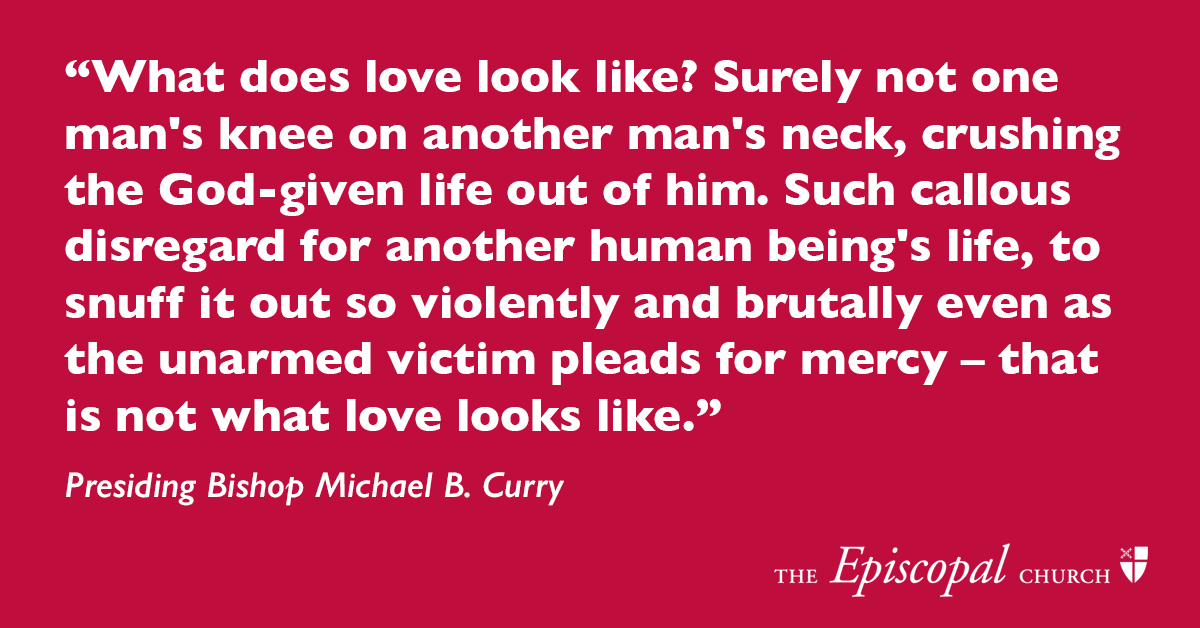
Our nation’s heart breaks right now because we have strayed far from the path of love. Because love does not look like one man’s knee on another man’s neck, crushing the God-given life out of him. This is callous disregard for the life of another human being, shown in the willingness to snuff it out brutally as the unarmed victim pleads for mercy.

Love does not look like the harm being caused by some police or some protesters in our cities. Violence against any person is violence against a child of God, created in God’s image. And that ultimately is violence against God, which is blasphemy — the denial of the God whose love is the root of genuine justice and true human dignity and equality.

Love does not look like the silence and complicity of too many of us, who wish more for tranquility than justice.

“What does love look like? Not like this.” These words — spoken Thursday night by my friend Craig Loya, the newly elected Episcopal bishop of Minnesota — haunt me. I look at searing images of racialized violence across our country — against the backdrop of the disproportionate number of covid-19 victims who are black, brown and native — and I cannot help but notice love’s profound and tragic absence.

So what is the path of love? In times like these, how can we find it and follow it?

When I think about what love looks like, I see us channeling our holy rage into concrete, productive and powerful action. In this moment, love looks like voting for leadership at the local, state, and federal level that will help us to make lasting reform. Love looks like calling on officials and demanding they fulfill their duty to protect the dignity of every child of God.

Love looks like making the long-term commitment to racial healing, justice and truth-telling — knowing that, without intentional, ongoing intervention on the part of every person of good will, America will cling to its original, racist ways of being.

Love looks like working with local police departments to build relationships with the community and develop mechanisms that hold officers accountable. It means ensuring that no police officer with a history of unauthorized force or racialized violence is shielded and allowed to endanger the lives of those they’ve sworn to protect and serve.

Love looks like all of us — people of every race and religion and national origin and political affiliation — standing up and saying “Enough! We can do better than this. We can be better than this.”

What does love look like? I believe that is what Jesus of Nazareth taught us. It looks like the biblical Good Samaritan, an outsider who spends his time and money healing somebody he doesn’t know or even like.

What America has seen in the past several days may leave us wondering what we can possibly do in this moment to be good Samaritans — to help heal our country, even the parts we don’t know or like. But we have the answer. Now is the time for a national renewal of the ideals of human equality, liberty, and justice for all. Now is the time to commit to cherishing and respecting all lives, and to honoring the dignity and infinite worth of every child of God. Now is the time for all of us to show — in our words, our actions, and our lives — what love really looks like.