Tuesday, September 9, 2014

Apple Festival Sermon

Owe no one anything, except to love one another, wrote St. Paul to the Romans. Love does no wrong to a neighbor; therefore, love is the fulfilling of the law.

Love never wrongs the other or does what is hateful. It helps others. But love also recognizes when behavior is hurting others and needs to be corrected. I am thinking of the Gospel for today & Jesus reminder that even in our community we need to loving help each other, and a story I recently read in Doris Donnelly ‘s book Learning to Forgive:
When the family had moved to a new city, seven-year-old son Christopher started the school year with a head-on collision with the 12-year-old school bully. On the first day of school the bully pushed Christopher off the school bus, ordered him to carry his books home, and made the prospect of going to school a horror for him. Mom, of course, was outraged. She wanted to take on the bully, the boy's parents, his teacher and the school principal. But Christopher said, "But if he stops picking on me, he'll only start picking on someone else. Some other kid in school is going to get it if it's not me! I'd rather find some way of getting along with him because I'll probably be living with him for a long time."

It took Mom a few days to see things the way Christopher saw them - her immediate maternal instinct was to protect her child above all. But she realized the wisdom of her son's perspective.

Mom writes: “My goal shifted. The goal was no longer wanting to get even, to 'fight fire with fire' ... My goal- my family's goal - was to set this child free to love more than he was apparently capable of doing at the time. "I approached the principal and told her that we wanted to work through the problem for our good, for the benefit of the other child who was harassing mine, and for any children who might be affected in the future. The principal was cooperative. She and I saw the need the bully had for attention, and we set on a course to affirm him, enlist his support with the smaller children, and encourage him as an older boy to be helpful to my son. It didn't work. We tried again. And again. And again.

"We found that there was no magic formula. We found that love, above all, is patient. And we found that love, in the end - in the end that looks as though it will never come - in that end, love triumphs."
Love never means that we are door mats and doesn’t mean that it will be easy. Loving is just as easily a No as it is a Yes. But Love is not about judging others as it is about living lives of integrity and doing good to those around us. The Gospel reminds us that what binds us together, Love, is found in the person of Jesus.

Let me end with another story – this for the children – a story often told by Wangari Matthai.

Wangari Maathai was from Kenya. In the 1970s, Maathai founded the Green Belt Movement, an organization focused on the planting of trees, environmental conservation, and women’s rights. In 2004, she became the first African woman to receive the Nobel Peace Prize.
“It is the little things citizens do that will make a difference. My little thing is planting a tree.” Wangari Maathai. The Green Belt movement has planted over 51 million trees in Kenya.
We all have our part to play, all of us can make a difference, no matter what our age, no matter what our size, we all can love… The Story of the Humming Bird. Amen.

Tuesday, September 2, 2014

Creation Day (in a Season of Creation)


A Season of Creation begins on September 1.
1 September to 4 October is Time for Creation.

The beginning and the end date of Time for Creation are linked with the concern for creation in the Eastern and the Western traditions of Christianity, respectively.

September 1st was proclaimed as a day of prayer for the environment by the late Ecumenical Patriarch Dimitrios I in 1989. The Orthodox church year starts that day with a commemoration of how God created the world. On 4 October, Roman Catholics and other churches [Episcopal Church!] from the Western traditions commemorate Francis of Assisi, known to many as the author of the Canticle of the Creatures.

The proposal to celebrate a Time for Creation during these five weeks was made by the Third European Ecumenical Assembly in Sibiu in 2007.The following year, the WCC Central Committee invited churches to observe Time for Creation through prayers and actions. ( from the World Council of Churches website: http://www.oikoumene.org/en/what-we-do/climate-change/time-for-creation )
A Prayer:

Holy God, you alone are unutterable,
from the time you created all things that can be spoken of.
You alone are unknowable,
from the time you created all things that can be known.
All things cry out about you: those that speak, and those that cannot speak.
All things honor you: those that think, and those that cannot think.
For there is one longing, one groaning, which all things have for you.
All things pray to you that comprehend your plan and offer you a silent hymn.
In you, the One, all things abide,
and all things endlessly run to you who are the end of all. Amen.
(source: Gregory of Nazianzus)

Jesus Statue Comes to St. Peter’s Church


On September 1 (through September 15), a life-sized sculpture of a homeless Jesus will grace the front of St. Peter’s Episcopal Church, as a public witness of St. Peter’s commitment to remember and love all of our neighbors. The sculpture, by Canadian sculptor Timothy P. Schmalz, was inspired by the parable Jesus told to his followers near the end of the Gospel of Matthew. Schmalz titled his sculpture, "Whatsoever You Do."

“This sculpture is a visual representation of charity. We should see Christ in the poor and the hungry. We should see our acts of kindness to them as kindness to Him. It is inspired by the Gospel of Matthew 25:40.” (from Schmalz’s website)

He describes his sculptures “as being visual prayers.”

The sculpture is a poignant reminder of God’s invitation to see Jesus in everyone we encounter. At the same time, the statue invites us to recall our shared humanity with the homeless we worshipped alongside at Chapel on the Green in New Haven, the hungry we feed through the Monroe Food Pantry, our participation in the Bridgeport Deanery feeding programs, and those strangers in Monroe whose need we do not yet know. At the very heart of all these ministries, is our willingness to embrace everyone as a child of God.

The statue has been traveling throughout the Episcopal Diocese of Connecticut; it had a brief stay at Camp Washington and will be displayed in over a dozen churches throughout the year. Please do take a few minutes to come by the church to sit with Jesus, who beckons us with sadness and hope as a powerful reminder of our ministry to love our neighbors as ourselves.

To learn more:

Video by the artist concerning the “Whatsoever You Do” sculpture:

http://www.youtube.com/watch?v=2sGkDEDPCPI

The artist’s webpage:

http://www.sculpturebytps.com/

“‘Lord, when did we see you hungry and feed you, or thirsty and give you a drink? When did we see you as a stranger and welcome you, or naked and give you clothes to wear? When did we see you sick or in prison and visit you?’ “Then he will reply to them, ‘I assure you that when you have done it for one of the least of these brothers and sisters of mine, you have done it for me.’”
(from Matthew 25: 37-40 - Common English Bible (CEB))

Sunday, August 31, 2014

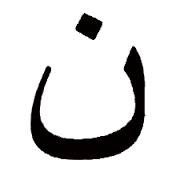
Prayer for Christians facing persecution abroad


Remembering especially the Christians in the Middle East who are persecuted for their faith.

O Lord God, your Son Jesus Christ suffered and died for us.
In his resurrection he restores life and peace in all creation.
Comfort, we pray, all victims of intolerance
and those oppressed by their fellow humans.
Remember in your kingdom those who have died.
Lead the oppressors towards compassion
and give hope to the suffering.
Through the same Jesus Christ our Lord. Amen.
(from the Church of England)

O God, the Father of all, whose Son commanded us to love
our enemies: Lead them and us from prejudice to truth:
deliver them and us from hatred, cruelty, and revenge; and in
your good time enable us all to stand reconciled before you,
through Jesus Christ our Lord. Amen.

(from the BCP - For our Enemies)

Praying for Iraq and How we can Reach Out


When asked about prayer, Canon Andrew White (Vicar of Baghdad) said, “I have three ‘P’s that I always mention which is for Protection, Provision and Perseverance. We need protection, we need to provide for those people [who are being persecuted] and we need to keep going.”

Prayer for Iraq

Gracious and loving God, we pray for the people of Iraq who live daily with terror and war.  Protect all those in harm way and help the refugees fine the places of safety.  Guide those who provide aid to the persecuted and give your strength to help all the people persevere until that day they can leave in peace. Amen.

The Archbishop of York, Dr John Sentamu has written prayers for the people of Mosul
Lord, in this city where Christians and Muslims have lived together for over 1400 years, we pray for healing, peace and restoration. Bring light out of this present darkness and hope from despair that guided by your Holy Spirit, all your children may find a new way forward together based on your love for us all. Amen

Holy God, your Holy family was driven into exile and many holy innocent boys were massacred, we hold before you today the suffering people of Mosul. Amen

Hold in your loving arms, all those who have been caught up in this conflict. We pray for those forced to flee their homes, all who have lost friends, family and possessions and who now face an uncertain future. Bless our Christian brothers and sisters who have seen the destruction of their churches and communities and for our Muslim neighbours who have also experienced destruction and suffering. Amen

To help go to: https://www.facebook.com/FRRME

FRRME (Foundation for Relief and Reconciliation in the Middle East) supports the work of Canon Andrew White and St George's Church in Baghdad - promoting peace, striving for reconciliation and providing relief to those in need - of all religions and sects, both Christian and Muslim.

Sermon - August 31

It is good to be back. This summer has gone by quickly (doesn’t it always?) but this summer, we have watched so many people endure so much in their lives… Be it in Mosul or Gaza or Tel Aviv, in the Ukraine or Liberia or Sierra Leone, Be it with Robin Williams or in Ferguson, MO, or even the Ice Bucket Challenge for ALS…

Whether one lives in remote villages in Africa or urban centers of America, few have been untouched in some way by the reality of war, disease, racism, suicide, violence, hate, fear.

We all have been touched. In the days of Jesus, the specter of violence, fear and death was a daily part of their lives too.

In today’s Gospel reading, Jesus tells the disciples of the suffering and death that will happen to him; in some ways, with the experience of death so near, Jesus words should not be so surprising but the disciples are shocked that the messiah would suffer. Peter does not want to hear it…
Peter pulls Jesus aside and said, “God forbid it, Lord! This must never happen to you.” Peter who was praised last week for his declaration of faith, to which Jesus called him the rock upon which the Church will be built becomes the stumbling rock this week…

Jesus turned and said to Peter, "Get behind me, Satan! You are a stumbling block to me; for you are setting your mind not on divine things but on human things."
Satan and stumbling block – Jesus could not have been more forceful with his words for his disciples to understand what they are doing. Satan – the adversary – still tempts his disciples to find the easy way out. And yet, what Satan offers is a stumbling block for their discipleship. Peter’s response is often are own response, we want to act in ways we would act, often the easy way out. For obviously we know best; but Jesus has something else in mind…

For when Jesus seemed to be talking about death, he was talking about life. What Satan often seems to offer is life, but is ultimately connected to death.

The adversary who tempted Jesus at the beginning still exists, this time it’s in Peter’s rebuke of Jesus. Jesus commands Peter to get behind him and follow him, not the other way around. Suffering and death are part and parcel of what is to come and they cannot take the easy way out of it. Our faith hopes and lives in the midst of suffering and does not run away from it.

Canon Andrew White, who is nicknamed the Vicar of Baghdad, is the vicar of St George’s Anglican Church in Baghdad. He estimates that his flock used to number around 6,000 people, but in the last decade over 1,200 people have been killed, and many have fled to safer places. He refuses to leave Baghdad, despite the danger, as St. George's is Iraq's last Anglican church. He continues his ministry to his beleaguered community and to all the displaced in Iraq.
When asked about prayer, Canon White said, “I have three ‘P’s that I always mention which is for Protection, Provision and Perseverance. We need protection, we need to provide for those people [who are being persecuted] and we need to keep going.”
Canon White has understood that our following Jesus calls us into the places of great suffering and despair, to bring hope, life and love, just as Jesus did. That is part of our call as disciples of Jesus.
For Jesus told his disciples, "If any want to become my followers, let them deny themselves and take up their cross and follow me. For those who want to save their life will lose it, and those who lose their life for my sake will find it. “For what will it profit them if they gain the whole world but forfeit their life? Or what will they give in return for their life?”
To follow Jesus means the cross will be smack dab in the middle of our journey. But it doesn’t mean we need to be fatalistic about our lives or understand the cross as “this is my cross in life to bear," for such understanding focuses on death, “it is the cross without the resurrection,” as one author put it.

The cross Jesus calls us to bear, is the cross we each carry as his disciples. A cross that at times puts us out of step with society; a cross that will make us the object of ridicule; a cross that will make us do things we would rather not, but we know in the end, will lead us to a greater life than we could have imagined.
In the words of Stanley Hauerwas: “To learn to follow Jesus is the training necessary to become a human being. To be a human being is not a natural condition, but requires training. The kind of training required, moreover, has everything to do with death. To follow Jesus is to go with him to Jerusalem where he will be crucified. To follow Jesus, therefore, is to undergo a training that refuses to let death, even death at the hands of enemies, determine the shape of our living.”
This is not what our world sees as life, for life in our world is connected with power, prestige, status and wealth. It is the logic of this fallen world where we must fight to win our side, to possess, to secure our lives. But our faith calls us to follow Christ, to be transformed, not to let ourselves go down the easy path that Satan has before us.

There is a film called Of Gods and Men. It is a movie about nine Trappist monks from the monastery of Tibhirine where they ministered and lived among the Muslims of Algeria. As the Algerian Civil War escalated, with Muslim extremists killing Christians and foreigners, the monks faced a choice about whether to stay or go. In one scene, Luc, the monastery doctor is talking with Christian, the leader of the monastery. Luc has been treating some of the rebels, the extremists. Christian warns Luc to be careful. And Luc responds
“Throughout my career I've met all sorts of different people. Including Nazis. And even the devil. (pause) I'm not scared of terrorists, even less of the army. And I'm not scared of death. I'm a free man.”
Brothers and sisters, we are free in Christ. As the first letter of John reminds us, “We know that we have left death and come over into life; we know it because we love others… In this world we are like Jesus. There is no fear in love.”

Let us continue to follow Jesus, to fully live even with the specter of violence, fear and death all around us. Let us be the hope, the love, the light that helps others see life in the midst of darkness. Let us carry our cross and be transformed by Jesus. We are free. Amen.

Sunday, August 3, 2014

Praying for Peace in Israel & Gaza


Following a recent update from staff at the Al Ahli Arab Hospital in Gaza, a ministry of the Episcopal Diocese of Jerusalem, the Archbishop of Canterbury has spoken publicly (after many private contacts) of his concern for the deteriorating situation in Gaza.
Archbishop Justin Welby said today:

“You can’t look at the pictures coming from Gaza and Israel without your heart breaking. We must cry to God and beat down the doors of heaven and pray for peace and justice and security. Only a costly and open-hearted seeking of peace between Israeli and Palestinian can protect innocent people, their children and grandchildren, from ever worse violence.”

“My utmost admiration is for all those involved in the humanitarian efforts on the ground, not least the medical team and staff at Al Ahli Arab Hospital. Providing relief and shelter for those displaced is a tangible expression of our care and concern, and I encourage Church of England parishes and dioceses, as well as the wider Communion, to pray for them and support the Diocese of Jerusalem’s emergency appeal.

“While humanitarian relief for those civilians most affected is a priority, especially women and children, we must also recognise that this conflict underlines the importance of renewing a commitment to political dialogue in the wider search for peace and security for both Israeli and Palestinian. The destructive cycle of violence has caused untold suffering and threatens the security of all.

“For all sides to persist with their current strategy, be it threatening security by the indiscriminate firing of rockets at civilian areas or aerial bombing which increasingly fails to distinguish between combatants and non-combatants, is self-defeating. The bombing of civilian areas, and their use to shelter rocket launches, are both breaches of age old customs for the conduct of war. Further political impasse, acts of terror, economic blockades or sanctions and clashes over land and settlements, all increase the alienation of those affected. Populations condemned to hopelessness or living under fear will be violent. Such actions create more conflict, more deaths and will in the end lead to an even greater disaster than the one being faced today. The road to reconciliation is hard, but ultimately the only route to security. It is the responsibility of all leaders to protect the innocent, not only in the conduct of war but in setting the circumstances for a just and sustainable peace.

“While it is acceptable to question and even disagree with particular policies of the Israeli government, the spike in violence and abuse against Jewish communities here in the UK is simply unacceptable. We must not allow such hostility to disrupt the good relations we cherish among people of all faiths. Rather we must look at ways at working together to show our concern and support for those of goodwill on all sides working for peace.”

Echoing the prayer of Pope Francis, Archbishop Justin concluded by saying, “Let us pray to the Prince of Peace who so suffered in a land of violence that hearts may turn to peace and the innocent be helped.”

During recent weeks Archbishop Justin has expressed his concern about the violence in Gaza. He fully accepts that Israel has the same legitimate rights to peace and security as any other state and to self-defence within humanitarian law when faced with an external threat. At the same time he shares the despair, and acknowledges the growing anger felt by many, including Jewish people to whom he has spoken, at the recent escalation of violence by all involved. All this highlights the need for underlying issues to be addressed, whether the ongoing terror threat to Israel or the expansion of settlements in the Occupied Palestinian Territories. The failure to find constructive paths to peace poses a threat to the future of all the peoples of the region. [from ENS]

A prayer for peace:

Almighty God, kindle, we beseech thee, in every heart the true love of peace, and guide with thy wisdom those who take counsel for the nations of the earth, that in tranquillity thy dominion may increase till the earth is filled with the knowledge of thy love; through Jesus Christ our Lord, who
liveth and reigneth with thee, in the unity of the Holy Spirit, one God, now and for ever. Amen.