God of love, whose compassion never fails; we bring before you the griefs and perils of the peoples of Haiti; for the necessities of those left homeless; the helplessness of those shaken by earthquake; for the pains of the sick and injured; for the sorrow of the bereaved. Comfort and relieve them, O merciful Father, according to their needs and draw near to each; for the sake of Jesus Christ our Lord. Amen.
based on a prayer by St Anselm (1033-1109)
Loving Father, you comfort us in times of affliction: Our brothers and sisters have suffered a great tragedy and they need your healing. Send your Holy Spirit to soothe the anger, fear, and sorrow of their broken hearts. In the darkness of this moment, shine the light of your radiant love. Be their companion in their grief. In their pain, make them strong in courage, dry their tears, mend their hearts, and gently call them to newness of life. We thank you for the assurance of your love, shown in your Son Jesus, who suffered for us, died, and rose again to prepare our place in your eternal home. Amen.
Wednesday, January 13, 2010


The Latest News on Haiti
Go here for the latest information: http://www.episcopalcafe.com/lead/
The Episcopal Church has a large presence there including the following Episcopal schools from which we have as yet no word:
The Episcopal Church has a large presence there including the following Episcopal schools from which we have as yet no word:
St. Vincent’s School for the Handicapped (deaf, blind, and orthopedically handicapped) – the only school of its kind in Haiti, St. Vincent’s is located two blocks from the National Palace, which has been destroyed, and three blocks from the Catholic Cathedral, also reported destroyed. It is a residential school, so although it was late afternoon, many children would have been present. Pray for the students, staff, and Pere Sadoni, the director.
Holy Trinity School, Music School, and Trade School – located in the same area; music students would have been practicing and having lessons. Pray for the students, staff, and Pere Fernande Sanon, the director.
The rural schools in and near Darbonne, Leogane, and Chateau-Gaillard – these schools are located approximately on the epicenter of the earthquake. Pray for all of the students and staff as well as the clergy who are responsible for them.
Episcopal Relief & Development - Haiti Relief
Haiti Devastated by Earthquake
In the aftermath of a 7.0 earthquake, Episcopal Relief & Development is providing critical emergency funds to Haiti. We are currently accepting donations to the Haiti Relief Fund to support this assistance and will continue updating this site as we receive information.
Tuesday, January 12, 2010

Tuesday, January 5, 2010
Bible as Literature

“A Literary Bible,” by David Rosenberg, is a large book though not, of course, a complete translation of the Hebrew Bible. Genesis is fairly full, though one looks in vain for the passage “In the beginning . . . ,” from which Genesis takes its title in both Hebrew and Greek. The Prophets, from Samuel to Jonah, get about 160 pages, and an anthology drawn from the Writings — notably the Psalms and Job — occupies the remaining half of the book. Each selection has a preface providing scholarly information and justification for the assumptions and procedures of the present translator. An epilogue, “How the Bible Came About,” makes these points in a more expansive way.
Read more about it here.
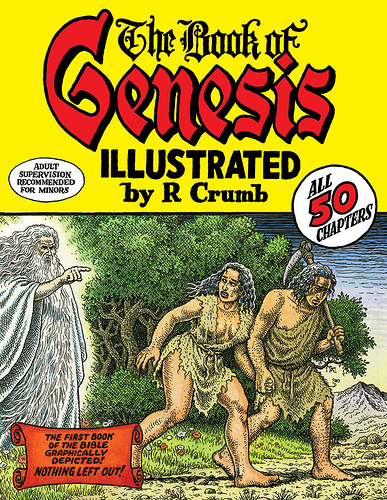 It is not in praise of the Creator that R. Crumb portrays him — in the splash page that begins his much-anticipated adaptation of Genesis in comic-book form — as Crumb sees his own father. He grew up in helpless terror of Charles Crumb Sr., a former Marine Corps master sergeant who lorded over his family with icy severity. Early in his progress on “The Book of Genesis,” Crumb was asked by Robert Hughes of Time magazine if he was drawing God to look like Mr. Natural (the burlesque cartoon shaman whom he has long employed to poke fun at pop spirituality). Crumb replied: “He has a white beard, but he actually ended up looking more like my father. He has a very masculine face.” Both paternity and masculinity are matters of dubious value to Crumb, a wonderfully unlikely candidate to breathe new life into the founding narrative of masculine privilege and paternal authority in the Judeo-Christian world.
Read more about it here.
Helping Refugees
Looking to help refugees?
Visit these sites:
UNHCR - The UN Refugee Agency
Episcopal Migration Ministries
IRIS ~ Integrated Refugee & Immigrant Services (New Haven, CT)
Visit these sites:
UNHCR - The UN Refugee Agency
Episcopal Migration Ministries
IRIS ~ Integrated Refugee & Immigrant Services (New Haven, CT)
Sermon: January 3 (2nd Christmas)
“The amounts needed to rescue people are less than what is needed to rescue banks.”High Commissioner António Gutteres for the UN Refugee Agency said last summer. There are an estimated 16 million refugees in our world today. That’s about 5 times the population of CT. That is 16 million people - families, children who have fled their country of origin to escape danger or persecution there. Why does that matter? Because on this day, we remember that Jesus was made a refugee by King Herod. We know the first part of the story…
Wise men from the East come looking for the child who was to be born. These Wise men, magi, are gentiles and they have come to pay homage to the newborn king. Can you imagine Herod's surprise? His fear and anger over one who could supplant his role as king? He wants to know about this child and he wants the wise men to report back to him when they know where he is, so he too can pay homage. But of course, we know that is the last thing he would do.
The wise men continue their search, they follow the star and are overwhelmed with joy when they find Mary & Joseph and Jesus. The wise men kneel down before the baby Jesus and offer their gifts: gold, frankincense and myrrh, and having been warned in a dream not to return to Herod, they go home by another road. We remember the Wise Men, they are in our crèche scenes, we sing about them, but we forget that their place in our Christmas Story is also a political one. For this story is also about Herod who will do anything to hold onto his power.
As one Anglican priest put it…
"Herod represents the dark side of the gospel. He reminds us that Jesus didn't enter a world of sparkly Christmas cards or a world of warm spiritual sentiment. Jesus enters a world of real pain, of serious dysfunction, a world of brokenness and political oppression. Jesus was born an outcast, a homeless person, a refugee." (Joy Carroll Wallis)Remember that in 6 BC, Rome was the occupying power in the land of Israel. Caesar Augustus was on the thrown, the first Roman emperor that unified the empire. Herod the Great ruled the land of Judea. He was King because Rome put him there. He was distrusted and disliked by the population because of his connections to Rome and his brutality. In the midst of this, God comes to us and Jesus is born. We remember that he was born not among family & friends, but in a stable with animals. The holy family are outcasts and would become refugees.
Our Christmas Story often ends with the Wise Men leaving by another road, but it doesn’t end there at all. For Joseph is likewise warned in a dream to leave Bethlehem and flee to Egypt for Herod wants to destroy Jesus. And Joseph listens to the dream, he protects his family and they escape to Egypt just in time. For Matthew then tells us of the slaughter of the innocents, males 2 years old and younger in the region of Bethlehem ordered killed by Herod after Herod did not hear from the wise men. Thankfully his murderous reign comes to an end, and Mary & Joseph who are refugees in the land of Egypt return with Jesus and make their home in Nazareth in Galilee after Herod's death.
Herod is not a cuddly character we embrace and we often forget his role in that first Christmas, but He reminds us that the world that Jesus was born into, is the same world we live in now. War, death, murder, political infighting, take place now as they did then. And innocent people are often caught in the middle and end up as victims and refugees. But we also know that God intercedes on our behalf in the best and worst of times; even with the power of Rome & Herod in place, God comes to us in a helpless baby in their midst. He is not recognized except for some outsiders, he is forced to flee from Bethlehem because his life is threatened, he is a refugee in a country and will find no home until Herod is dead.
Where is the star that we follow? Where does our faith call us to use our gifts?
One such ministry is called Iris - Integrated Refugee & Immigrant Services. It is a program of our Episcopal Diocese of Connecticut and is the local affiliate of Episcopal Migration Ministries and the Immigration and Refugee Program of Church World Service. IRIS resettles approximately 100 refugees each year. Currently, over half of IRIS’s refugee clients come from Iraq. Others come from Afghanistan, Congo, Cuba, Ethiopia, Iran, Somalia, Sudan, and other countries.
And as reminder of what this ministry is all about, the logo for Episcopal Migration Ministries has Mary riding a donkey carrying Jesus as Joseph follows behind them looking back, as they flee to Egypt. For we are reminded on this Sunday to use our gifts, to pray, to lift up and give our voice and our actions to help those fleeing persecution and danger, to see Christ in this world through the lives of the children and how they suffer, and to stand up against the Herod's of this world.

For Christmas is more than our coming to the manger to pay homage, it is also how we give our gifts to the world in the name of the one who was a refugee, who was terrorized and threatened, who died at the hands of politics and power. It is offering our gifts to the Christ Child in our midst today...
For when the song of the angels is stilledOur Christmas festivities are nearing the end, but our work of Christmas has just begun. Let us journey and find the Christ child knowing it may lead us not to palaces or to places of joy, but to refugee camps, war zones, ghettos, places of poverty and areas of destruction. Let us help shed the light of Christ to those who walk in darkness today. Because today we celebrate the Light that has come into the world for all people, and the darkness has not and will not overcome it.
when the star in the sky is gone
when the kings and princes are home
when the shepherds are back with their flocks
the work of Christmas begins:
to find the lost
to heal the broken
to feed the hungry
to release the prisoner
to rebuild the nations
to bring peace among the people
to make music in the heart.
(Howard Thurman)
Let us pray: O God, we ask your living protection of all refugees yearning for freedom and hope in a new land. May we ever remember that the Holy Family, too, were refugees as they fled persecution. Bless, guide and lead us in faith to open doors and to open our hearts through this ministry of hospitality. Give us strength, vision and compassion as we work together to welcome those in need. We ask this in the name of your son, Jesus Christ, our Lord. AMEN.
Subscribe to:
Posts (Atom)